Spring is just around the corner, and successful lawns don't happen by accident—they're the result of proper planning and timely action. At Dream Greener Lawn & Landscape, we've helped hundreds of Pittsburgh homeowners transform their turf from patchy and weed-filled to thick, green, and healthy. The secret? Having a clear lawn care roadmap that outlines exactly what to do and when to do it.
Whether you're managing your own lawn care or partnering with Dream Greener, understanding the seasonal rhythm of Pittsburgh turf management helps you make informed decisions and set realistic expectations. In this comprehensive guide, we'll walk you through Dream Greener's 2026 lawn care calendar, explain the science behind each service, and show you how our systematic approach creates the lush, resilient lawns our clients enjoy throughout Mt. Lebanon, Upper St. Clair, Bethel Park, and beyond.
Understanding Pittsburgh's Lawn Care Season
Pittsburgh's climate presents unique challenges and opportunities for lawn care. We grow cool-season grasses (primarily Kentucky bluegrass, perennial ryegrass, and fine fescues) that thrive during spring and fall but stress during summer heat. This growth pattern dictates our entire maintenance approach.
According to Penn State Extension, late summer to early fall is the best time to establish new lawns from seed because seedlings face reduced weed competition and enjoy two cool growing seasons (fall and spring) before encountering summer heat stress. However, spring represents the critical period when proper care sets the foundation for year-round success.
Winter: The Planning Phase (January - February)
While your lawn sits dormant beneath snow and frozen ground, winter is actually when professional lawn care begins. This is when Dream Greener's team conducts soil testing, develops customized fertility programs, and prepares for the busy spring season.
Professional Soil Testing
As outlined in our Pittsburgh Lawn Care Schedule, January through March is the perfect time to focus on your soil which is the foundation of lawn health. We begin the season with professional soil testing to assess pH levels, nutrient deficiencies, and compaction issues.
Why winter soil testing matters:
- Lime applications need months to alter soil pH, so winter testing allows corrections before spring growth
- Lab turnaround times are faster during winter months
- Results inform your entire year's fertility program
- Early testing means amendments can be ordered and scheduled before spring rush
Tree Pruning and Property Assessment
Winter's bare branches provide optimal visibility for evaluating your property's overall health. Our team performs dormant-season tree pruning, removing dead or damaged wood and shaping ornamentals while disease pressure is minimal. This work improves tree structure and prevents problems before spring growth begins.
Early Spring: Foundation Building (March)
 March marks the transition from dormant to active growing season. As soil temperatures begin rising and grass starts greening up, it's time for your first critical lawn care applications.
Round 1: Pre-Emergent Crabgrass Control + Early Fertilization
Timing: Mid to Late March
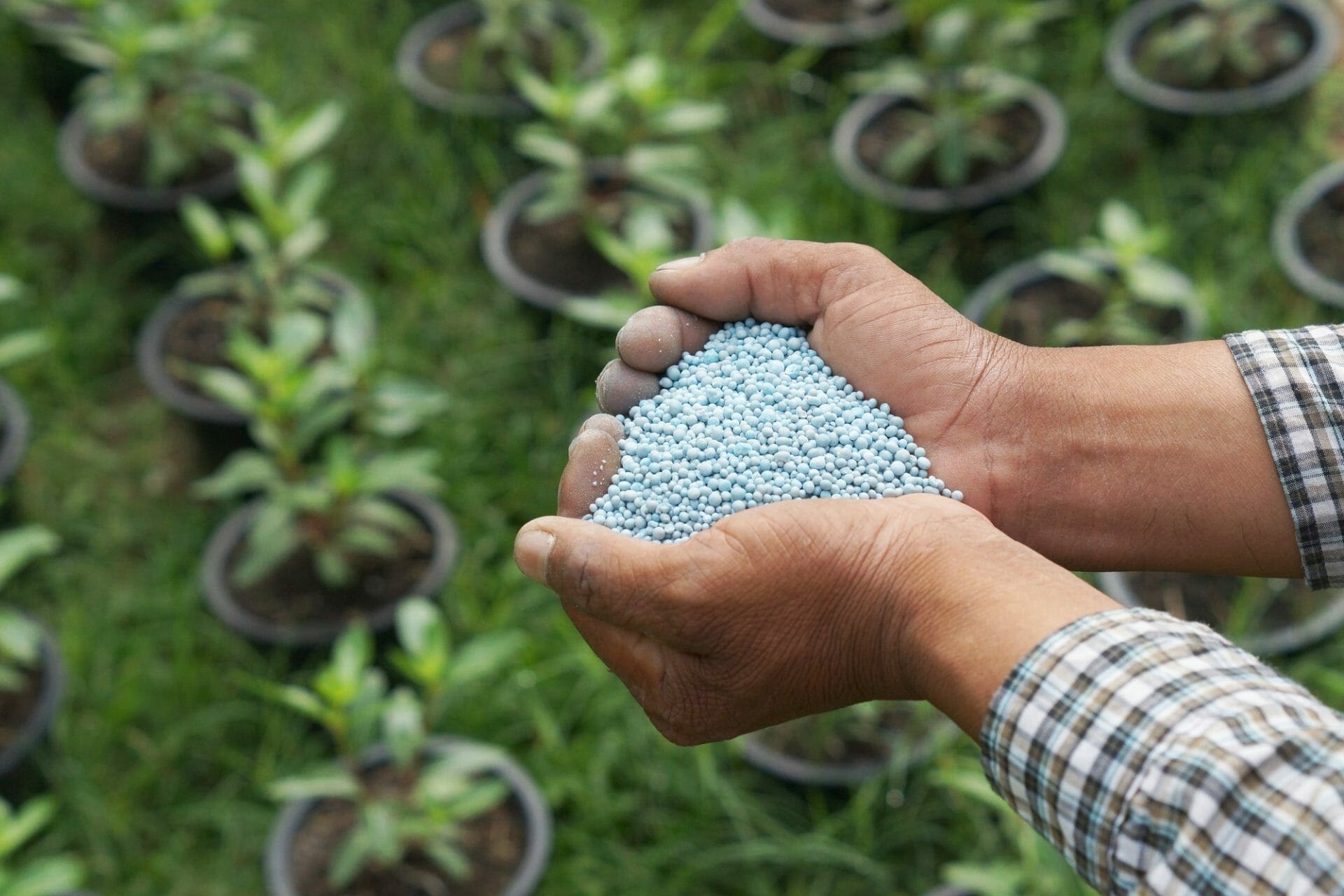
Dream Greener's first lawn treatment application is perhaps the most important of the entire year. We apply a custom-blended, slow-release fertilizer to replenish nutrients depleted during winter and encourage early green-up, paired with pre-emergent crabgrass control to prevent weed seeds from germinating.
The Science of Pre-Emergent Timing:
Penn State Extension emphasizes that timing of pre-emergence herbicide applications is the most critical component of an effective crabgrass control program. Crabgrass begins germinating when soil temperatures in the upper inch reach 55-58°F at daybreak for four to five consecutive days. The best time to apply pre-emergent materials is approximately 10-14 days prior to this expected germination period.
For Pittsburgh and the South Hills, this typically means applications between March 15 and April 15, with exact timing adjusted based on current year weather patterns. Forsythia bloom can serve as a visual indicator (full bloom signals crabgrass germination is imminent) but soil temperature monitoring provides more reliable timing.
What to expect after Round 1:
- Gradual green-up over 7-14 days as temperatures warm
- Invisible pre-emergent barrier forming in soil to block crabgrass seeds
- Slow-release fertilizer continuing to feed grass for 6-8 weeks
- Improved turf density as grass emerges from dormancy
Spring Clean-Up and Mowing Begins
By mid to late March, our mowing services begin as lawns emerge from dormancy. We follow science-based best practices, cutting at proper heights (typically 3-3.5 inches for cool-season grasses) to encourage deep root growth and prevent stress.
Spring clean-up removes leaves, sticks, and winter debris that accumulated over cold months, allowing sunlight and air to reach grass and preventing mold or disease development.
Spring Mulching and Bed Preparation
March is also when we begin spring mulching services. We hand-edge all landscape beds for crisp, clean lines, then install fresh layers of premium, seed-free shredded pine bark mulch using commercial-grade bark blowers. This helps retain moisture, suppress weeds, regulate soil temperature, and protect plants while providing a polished appearance.
Mid-Spring: Building Momentum (April - May)
 As temperatures stabilize and grass growth accelerates, your lawn needs continued nutrition and weed control to develop the density and vigor that crowds out weeds naturally.
Round 2: Spring Fertilization + Weed Control
Timing: Mid to Late April
Our second application delivers granular slow-release fertilizer to promote steady, healthy growth as weather warms. This treatment includes both pre-emergent and post-emergent weed control targeting summer annual grassy weeds before and after they appear. If any broadleaf weeds (dandelions, clover, etc.) are present, we spot-treat them with targeted liquid applications.
What to expect:
- Continued green-up and thickening of turf stand
- Control of early-emerging weeds before they establish
- Sustained nutrition from slow-release nitrogen sources
- Improved color and density heading into late spring
Round 3: Early Summer Preparation
Timing: Late May
Round 3 delivers essential early summer nutrients through balanced fertilizer supporting healthy growth and color during warmer months. We also apply treatments for both surface and sub-surface insects, including chinch bugs and grubs, to prevent turf damage before it starts. As needed, we spot-treat persistent broadleaf weeds.
Professional Lawn and Plant Analysis
Throughout spring, Dream Greener's trained professionals conduct detailed Lawn & Plant Analysis visits. We evaluate your lawn and landscape beds for signs of pest activity, disease, nutrient deficiencies, drainage issues, and other concerns. This proactive approach identifies problems before they escalate, allowing targeted interventions rather than reactive treatments.
Late Spring into Summer: Stress Management (June - August)
As temperatures climb and rainfall becomes less reliable, lawn care focus shifts to maintaining health during stress periods.
Rounds 4 & 5: Summer Fertilization and Recovery
Timing: June and July
These applications deliver carefully blended fertilizers rich in organic nutrients and iron, helping lawns stay strong and green through heat and drought stress. We include targeted weed control as needed for persistent or hard-to-control weeds.
Summer treatments support deeper root growth and turf resilience during challenging conditions while preparing lawns for the critical fall growing season—Pittsburgh's most important period for lawn development.
Proper Mowing and Irrigation
Research demonstrates that maintaining proper mowing heights (3 inches or taller) during summer helps grass shade out weeds and retain soil moisture. Our professional mowing services use sharp blades for clean cuts that minimize stress and disease risk.
While Pennsylvania receives adequate annual rainfall for lawn survival, supplemental irrigation during extended dry periods maintains quality and prevents dormancy. Deep, infrequent watering promotes healthy root systems better than frequent shallow watering.
Fall: The End of Growing Season (September - November)
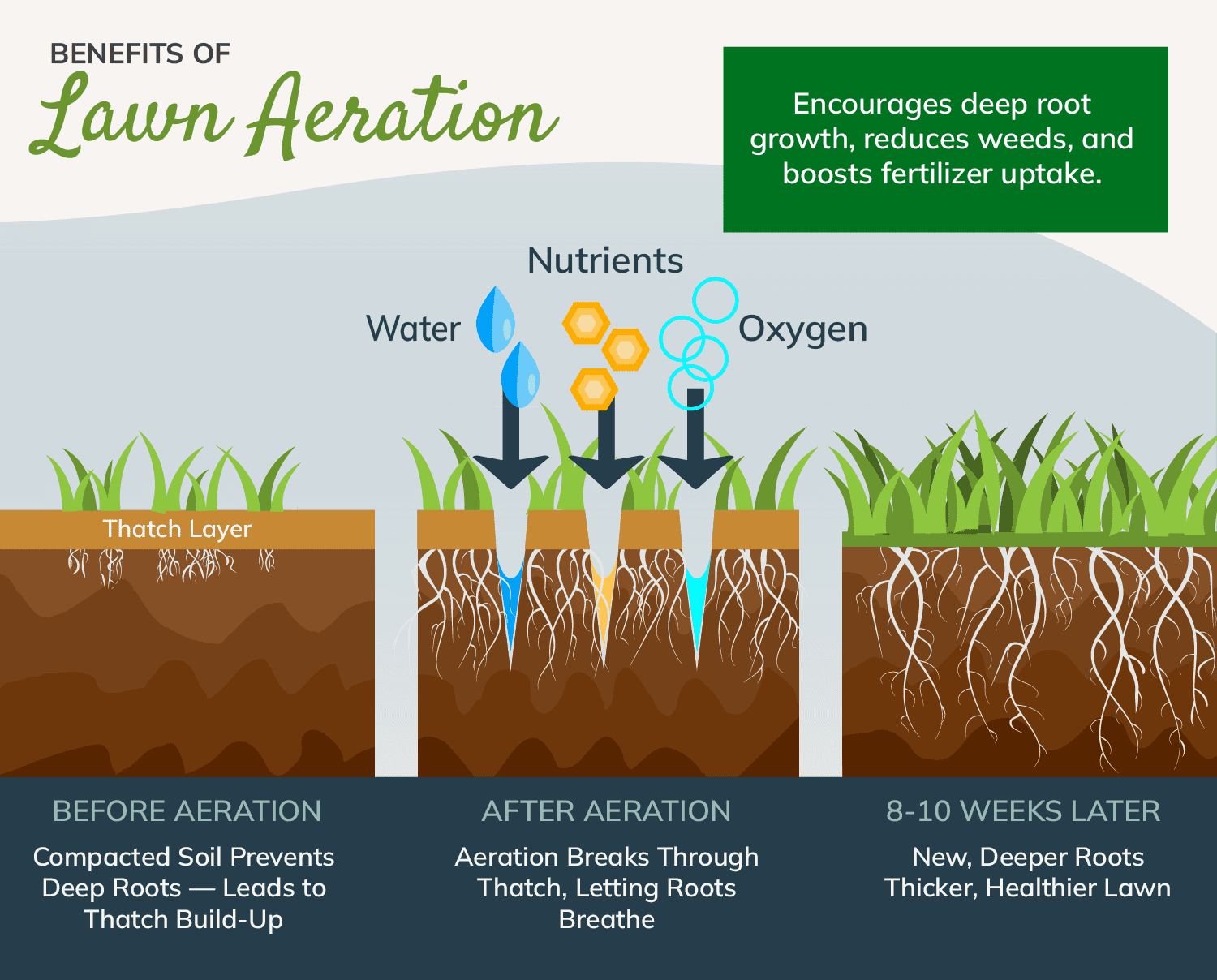 Fall is when cool-season grasses thrive. Moderate temperatures, adequate moisture, and declining weed pressure create ideal conditions for lawn improvement.
Aeration and Overseeding
Timing: September
Fall is the ideal time for core lawn aeration and overseeding. Aeration relieves soil compaction which is a major problem on Pittsburgh's clay soils, improving water, air, and nutrient flow to roots. Overseeding fills thin or bare areas with fresh, resilient grass.
At Dream Greener, we use premium seed blends selected specifically for Pittsburgh's climate and your lawn's conditions, setting the stage for thicker, healthier turf the following spring.
Fall Fertilization
Timing: September through November
Fall fertilizer applications are arguably more important than spring feeding for cool-season grasses. As air temperatures cool but soil remains warm, grass focuses energy on root development rather than top growth. This builds the foundation for strong spring performance.
Our Round 6 winterizing fertilizer (November) uses slow-release blends designed to prepare turf for cold months ahead, promoting deep root development and strengthening natural defenses against winter diseases.
Lime Application
Timing: November
Based on soil test results from winter testing, we apply lime in fall to correct acidic soil conditions. Penn State Extension notes that lime applications work best when incorporated into soil, and fall application allows months for pH adjustment before spring growth demands full nutrient availability.
Your Lawn Care Partnership with Dream Greener
While this roadmap provides general timing and expectations, every lawn is unique. Soil conditions, sun exposure, traffic patterns, and previous care history all influence what your specific property needs.
The Dream Greener Difference
- Customized Programs: We develop fertility and treatment programs based on your lawn's actual soil test results and observed conditions, not generic one-size-fits-all approaches.
- Science-Based Timing: Our applications center around real-time weather monitoring to optimize effectiveness.
- Professional-Grade Products: We use commercial-quality fertilizers with slow-release nitrogen sources, proven pre-emergent herbicides, and targeted weed controls unavailable to homeowners.
- Trained Technicians: Our team receives ongoing education on turfgrass science, pest identification, and proper application techniques.
- Comprehensive Service: Beyond basic fertilization and weed control, we offer lawn aeration, overseeding, soil testing, pest management, and ongoing monitoring through our Lawn & Plant Analysis visits.
- Transparent Communication: You'll know exactly what we're applying, when we're coming, and what results to expect. In addition, our Pittsburgh Lawn Care Schedule provides month-by-month visibility into our services.
Common Questions About a Professional Lawn Care Program
When should I start lawn care services?
The ideal time to begin is late winter (January-March) so soil testing and program planning occur before the growing season. However, Dream Greener accepts new clients year-round and will adjust the program based on when you start.
Can you fix a severely damaged lawn?
Often yes, but it depends on the cause and severity. Weed-filled lawns, thin turf, and pH imbalances typically respond well to proper care. Severe compaction, inadequate sunlight, or poor drainage may require renovation (aeration/overseeding) or landscape modifications.
How long before I see results?
Initial green-up occurs within 7-14 days of first spring application. Significant improvement in density and weed control becomes apparent by mid-summer. Peak results typically develop over 2-3 seasons of consistent care.
What's included in your lawn care program?
Our comprehensive programs include 6 rounds of fertilization and weed control, pre-emergent crabgrass prevention, spot weed treatments, lime application (if needed per soil test), and regular Lawn & Plant Analysis monitoring. Additional services like aeration, overseeding, and mowing are available.
Do you guarantee your work?
We stand behind our services and will re-treat areas that don't respond as expected. However, results depend partly on factors outside our control (adequate moisture, proper mowing, etc.). We work with you to address any concerns and adjust our approach as needed.
Get Started with Your 2026 Lawn Care Program
Don't wait until crabgrass is already growing or weeds have taken over to think about lawn care. The most successful lawns are those where homeowners plan ahead and start services at optimal times. Dream Greener Lawn & Landscape has been helping Pittsburgh-area homeowners achieve beautiful, healthy lawns through science-based, customized lawn care programs. Our systematic approach addresses your lawn's specific needs while fitting your budget and goals.
Limited time lawn care promotion
If you want fewer problems and better results this summer, spring is not the time to guess. This spring, new lawn care clients who enroll in a full-season program receive a complimentary bonus application as part of their annual plan. Check out our lawn care promotion here. Current lawn care clients can refer a friend to Dream Greener and earn a complimentary treatment added to your account. All your friend needs to do is mention your name when they reach out.