Pittsburgh winters bring beautiful snow-covered landscapes and the ongoing challenge of keeping driveways, walkways, and steps safe. At Dream Greener Lawn & Landscape, we help South Hills homeowners protect their properties year-round, and that includes sharing practical advice for managing winter's toughest conditions.
Whether you're in Mt. Lebanon tackling steep front steps, clearing a long Upper St. Clair driveway, or navigating Bethel Park's hilly terrain, smart snow and ice removal protects your family, preserves your landscape investment, and prevents costly damage to hardscapes, plants, and turf. In this guide, we'll cover safe shoveling techniques, how to avoid salt damage, strategic snow placement, and when it makes sense to call professionals.
Why Smart Snow and Ice Removal Matters in Pittsburgh
Pittsburgh's South Hills experiences significant winter weather with an average of 28-44 inches of snow annually, depending on elevation and location. More challenging than total snowfall is our frequent freeze-thaw cycling, which creates the perfect conditions for dangerous ice formation.
Improper snow and ice management can lead to:
- Safety Hazards: Slips and falls on icy walkways send thousands of people to emergency rooms each winter. Property owners have legal responsibility to maintain reasonably safe conditions.
- Landscape Damage: Excessive salt kills plants, damages turf, and degrades soil structure. Careless snow piling suffocates shrubs and breaks branches.
- Hardscape Deterioration: Certain deicing products accelerate concrete spalling, discolor pavers, and damage natural stone surfaces we install throughout the South Hills.
- Drainage Problems: Poor snow placement can redirect meltwater toward foundations, create ice dams, or overwhelm drainage systems come spring.
 Safe Shoveling Techniques: Protecting Your Back and Heart
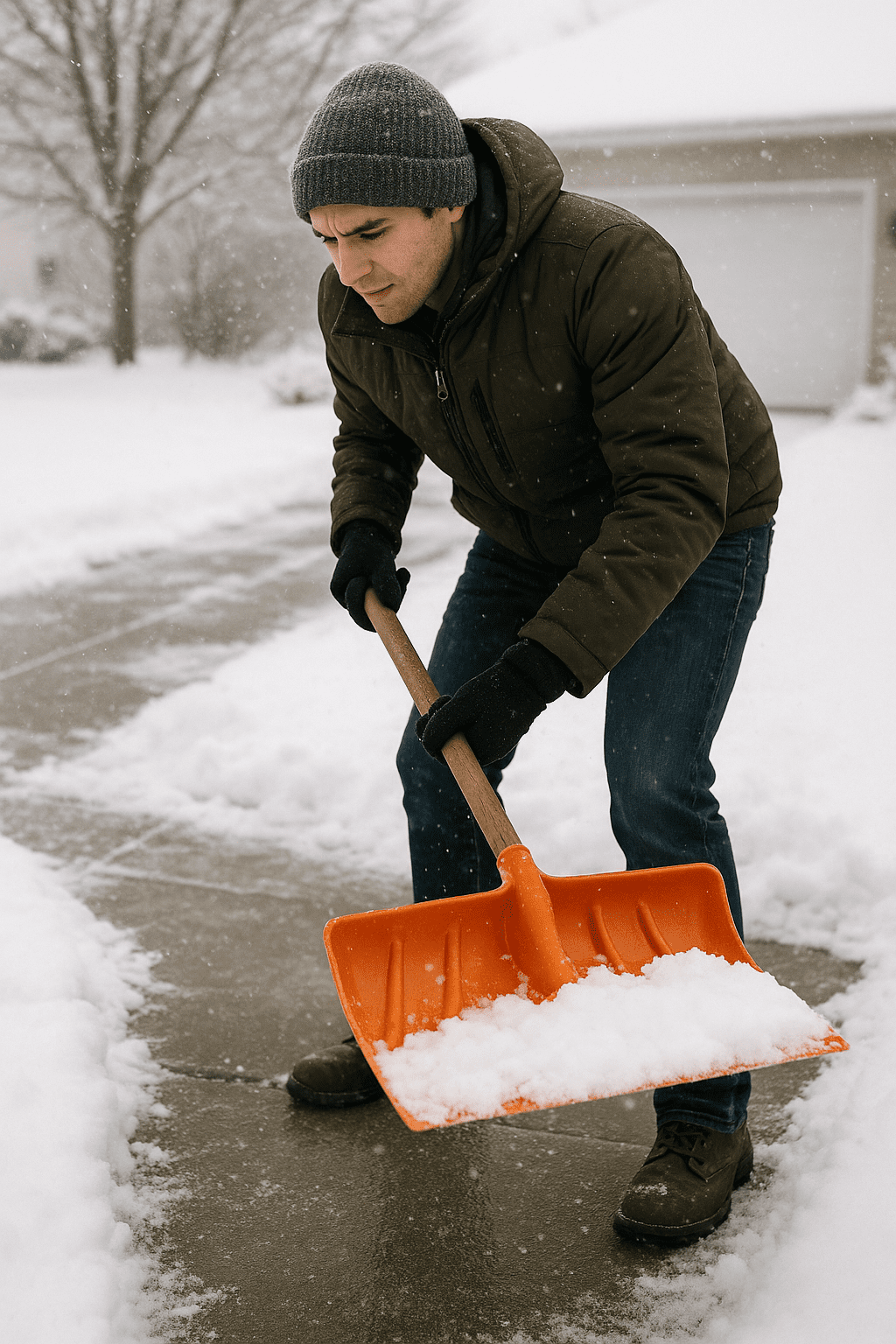
Snow shoveling is serious physical work. According to a study published in the American Journal of Emergency Medicine, snow shoveling sends an average of 11,500 adults and children to emergency departments annually for injuries ranging from muscle strains to cardiac events.
Before You Start Shoveling
- Warm Up First: Spend 5-10 minutes doing light stretching and movement. Cold muscles are more prone to injury.
- Dress in Layers: You'll heat up quickly while shoveling. Layers allow you to adjust comfort without getting soaked in sweat that later chills you.
- Stay Hydrated: Winter air is dry, and physical exertion increases water needs even in cold weather.
- Know Your Limits: If you have heart disease, high blood pressure, or aren't regularly active, consult your doctor before tackling heavy snow removal. Consider hiring help for the season.
- Choose the Right Tool: A good snow shovel has an ergonomic handle, lightweight blade, and appropriate size for your strength. Pusher-style shovels work well for powder; traditional scoops handle wet, heavy snow better.
Proper Shoveling Mechanics
- Push, Don't Lift: Whenever possible, push snow to the side rather than lifting and throwing it. This dramatically reduces strain on your back and shoulders.
- Bend with Your Knees: When you must lift, squat using your leg muscles rather than bending at the waist. Keep your back straight.
- Keep Loads Small: Take smaller scoops more frequently rather than overloading the shovel. Wet, heavy snow especially should be moved in manageable amounts.
- Avoid Twisting: Turn your entire body to change direction rather than twisting your torso while holding a shovel full of snow. Twisting while loaded is a primary cause of back injuries.
- Take Frequent Breaks: Work for 15-20 minutes, then rest for 5-10 minutes. This is work, not a race. Pace yourself.
- Clear Early and Often: Four inches of fresh powder is far easier to remove than twelve inches of settled, compacted snow. If a storm is predicted to dump significant accumulation, consider clearing in stages.
Warning Signs to Stop Immediately
Stop shoveling and seek medical attention if you experience:
- Chest pain or pressure
- Shortness of breath or difficulty breathing
- Severe headache or dizziness
- Unusual fatigue or weakness
- Pain radiating to arms, neck, or jaw
These symptoms can indicate serious cardiac events. Don't dismiss them as simple overexertion.
Where to Pile Snow: Strategic Placement for Your Pittsburgh Property
Where you put snow matters as much as removing it from walkways. Poor placement creates problems that won't become apparent until spring.
Where Snow Should Go
- Away from Foundations: Pile snow at least 3-5 feet from your home's foundation. As it melts, you don't want thousands of gallons flowing directly against basement walls.
- Downhill from Structures: On sloped properties common throughout the South Hills, pile snow on the downhill side so meltwater flows away naturally.
- Open Lawn Areas: Large, open sections of lawn can typically handle snow piles without damage, especially if you rotate locations throughout winter.
- South-Facing Locations: Snow piled in sunny, south-facing areas melts faster, reducing how long it sits on your property.
- Away from Road Drainage: Don't pile snow over storm drains or in street gutters, where it blocks drainage systems and may violate local ordinances.
Where Snow Should NOT Go
- On or Near Foundation Plantings: Shrubs, especially evergreens like yews, boxwoods, and rhododendrons, suffocate under heavy snow piles. Branches break under the weight, and prolonged contact with salty snow causes severe damage or death.
- Against Fences or Walls: Freeze-thaw cycles cause snow piles to expand and contract, potentially pushing fences out of alignment or damaging walls.
- Blocking Drainage Paths: Don't pile snow in areas where spring meltwater needs to flow. This includes swales, drainage ditches, or low spots designed to channel water.
- Over Septic Systems: If you have a septic system, keep snow piles off the drain field and tank area. Compacted snow prevents proper drainage and can cause system failures.
- In Flowerbeds or Garden Areas: Salt-contaminated snow damages soil structure and persists in garden beds, harming perennials and shrubs when growth resumes.
- On Hardscapes Long-Term: While it's fine for snow to temporarily sit on patios or driveways during storms, large piles left to slowly melt can cause freeze-thaw damage to pavers and natural stone, especially if heavily salted.
Special Considerations for South Hills Properties
- Pittsburgh's hilly terrain creates unique challenges. Many Mt. Lebanon and Upper St. Clair properties have steep driveways and limited flat areas for snow storage. In these situations:
- Clear snow to one consistent side rather than alternating, which gives you maximum driveway width
- Watch for ice buildup at the bottom of sloped driveways where snow melts and refreezes
- Consider using sand or kitty litter for traction on steep sections rather than relying only on salt
- Be mindful of where meltwater flows as steep properties can channel significant runoff toward neighbors or streets
Avoiding Salt Damage: Protecting Plants, Hardscapes, and Soil
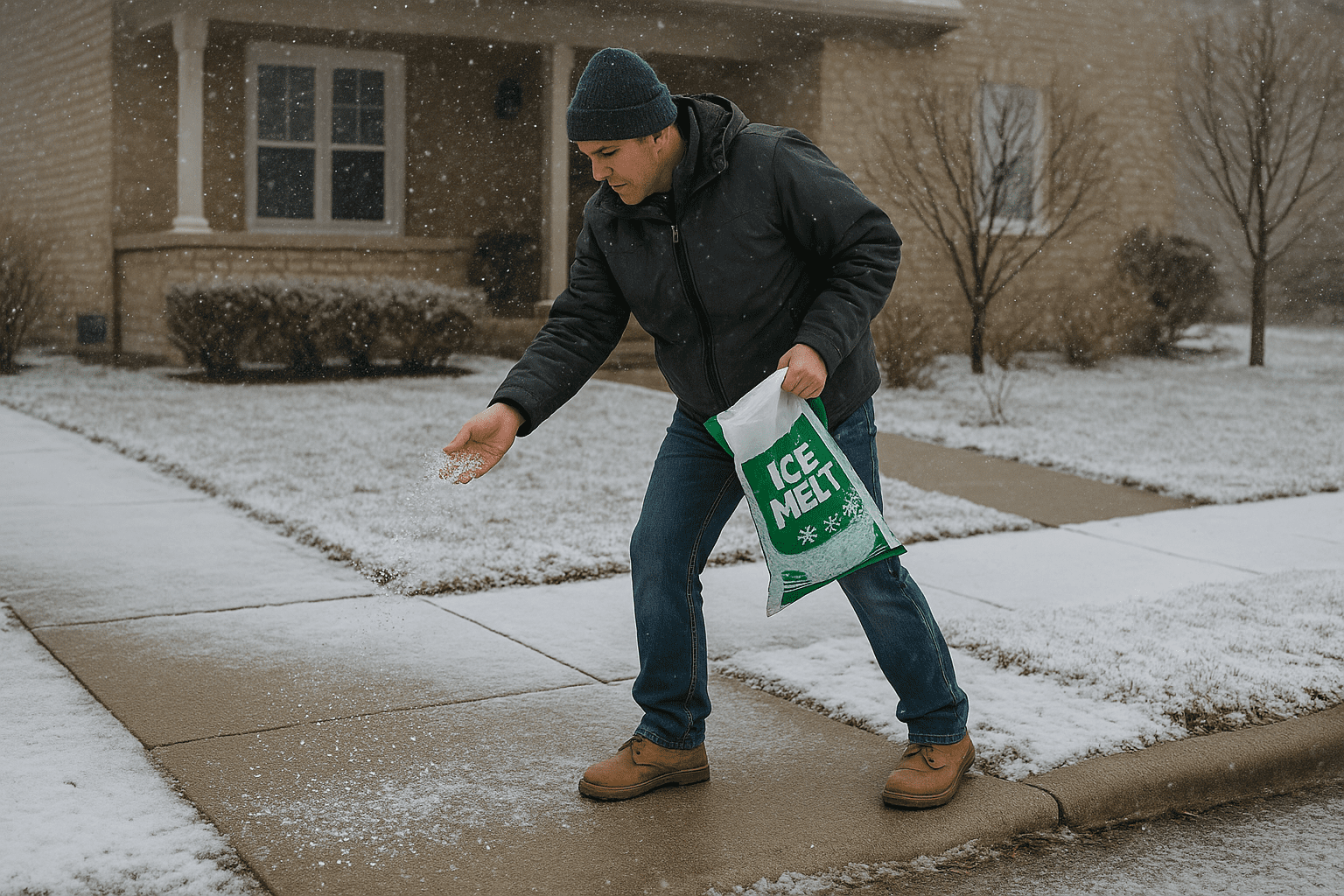
Road salt (sodium chloride) is effective at melting ice, but it comes with significant downsides for your landscape. Understanding alternatives and best practices preserves the plants and hardscapes we've helped you install.
How Salt Damages Landscapes
- Plant Injury: Salt spray from roads and sidewalks coats plant foliage, causing browning and die-back. Salt absorbed through roots disrupts water uptake and damages cell structures. Evergreens along driveways and walks are particularly vulnerable.
- Soil Degradation: Sodium accumulation degrades soil structure, reducing drainage and harming beneficial microorganisms. Salt buildup can take years to leach out naturally.
- Hardscape Deterioration: Salt accelerates concrete spalling and freeze-thaw damage, discolors pavers, and can etch natural stone surfaces. It also corrodes metal elements like railings and light fixtures.
- Groundwater Contamination: Excessive salt use contributes to elevated chloride levels in streams and groundwater, an environmental concern throughout Pennsylvania.
Safer Deicing Alternatives
- Calcium Magnesium Acetate (CMA): Less harmful to plants and concrete than sodium chloride. More expensive but significantly safer for landscapes. Works well in moderate cold (above 20°F).
- Calcium Chloride: Effective in lower temperatures than rock salt (works to -25°F). Less damaging to plants but still requires cautious use. More expensive than sodium chloride.
- Sand or Kitty Litter: Provides traction without chemical damage. Doesn't melt ice but prevents slipping. Requires cleanup in spring but causes no landscape harm. Excellent for steep driveways and steps.
- Urea-Based Products: Sometimes marketed as "pet-safe" deicers. Less corrosive than salt but can harm plants if overused. Moderate effectiveness.
- Beet Juice or Brine Solutions: Some municipalities use these. Effective and less environmentally harmful, though they can be messy and may attract animals.
Best Practices for Using Any Deicer
- Use Sparingly: More is not better. A light, even application works better than heavy dumping. One 12-ounce coffee mug of deicer typically covers a 20-foot driveway section.
- Apply Before Snow When Possible: Pre-treating surfaces before a storm prevents ice bonding, making snow removal easier and reducing total deicer needed.
- Sweep Up Excess: Once ice melts and temperatures moderate, sweep up remaining deicer rather than letting it sit or wash into beds.
- Rinse Plants in Spring: When weather warms, gently rinse salt-exposed plants with water to help leach deposits away.
- Consider Physical Removal First: If you can shovel or chip away ice mechanically, you'll need less chemical help.
- Avoid Using Near Sensitive Plants: Keep deicers away from specimen trees, foundation plantings, and garden beds. Use sand for traction in these areas instead.
Protecting Foundation Plantings During Winter
For evergreens and shrubs near walks and driveways where salt exposure is likely:
- Build burlap screens to block salt spray from passing plows or traffic
- Apply anti-desiccant sprays in late fall to protect evergreen foliage
- Consider relocating highly sensitive plants away from high-salt areas
- Choose salt-tolerant species for new plantings near driveways (we can recommend appropriate varieties)
Frequently Asked Questions About Winter Snow and Ice Management
How much snow should I remove before it becomes a problem?
Remove snow within 24 hours of a storm ending is often required by local ordinances, and sooner is better for safety. Even 2-3 inches can become hazardous when temperatures drop and ice forms underneath.
Should I clear snow all the way to pavement?
Yes, down to the pavement surface. Packed snow turns to ice quickly in Pittsburgh's freeze-thaw cycles. Clearing completely prevents dangerous ice layers from forming.
Can I use my snowblower on paver patios and walkways?
Yes, but use caution. Keep the blade height slightly elevated to avoid catching paver edges or joints. Be gentle to prevent dislodging pavers or sand.
How do I prevent ice dams on my roof?
Ice dams result from heat loss through the roof melting snow that refreezes at eaves. Solutions include improving attic insulation, ensuring proper ventilation, and using roof rakes to remove snow after storms. This prevents water backing up under shingles.
Is it okay to throw snow over retaining walls?
Avoid piling large amounts of snow directly against retaining walls. The freeze-thaw expansion can stress the structure. Keep heavy piles 2-3 feet away from walls when possible.
What should I do if I notice plant damage from salt after winter?
In spring, thoroughly water affected areas to help leach salt deeper into soil. Prune dead branches once you're certain they won't recover (typically late spring). Some plants may recover; others may need replacement. We can assess damage during spring consultations.
Protecting Your Landscape Investment All Winter Long
Smart snow and ice management is about the balance of keeping your property safe while protecting the landscape features and hardscapes you've invested in over the years. Whether you've worked with Dream Greener to install custom patios, retaining walls, or professional plantings, or you're simply caring for your property's existing features, thoughtful winter maintenance preserves everything you value. Pittsburgh winters are challenging, but with proper techniques and planning, you can keep your property safe and beautiful throughout the season.