If you own a home in Mt. Lebanon, Upper St. Clair, Bethel Park, Peters Township, or anywhere in the South Hills, spring lawn care feels urgent. The snow melts. The grass looks tired. The big box stores roll out pallets of fertilizer and weed control.
But here is the reality.
Some of the most common spring lawn habits in Pittsburgh are based on myths. And those myths cost homeowners real money through wasted products, unnecessary services, and expensive lawn renovations later.
At Dream Greener Lawn & Landscape, we have been serving the South Hills since 2013. We maintain over 500 properties and have earned more than 150 five star reviews on Google. We base every recommendation on soil data, local climate patterns, and 13 years of neighborhood level experience.
Let’s break down the biggest spring lawn myths we see across Mt. Lebanon, Peters Township, and Upper St. Clair.
Myth 1: “If the grass is green, it must be healthy”
In early April, many Pittsburgh lawns look green. That does not mean they are healthy.
Cool season grasses like tall fescue and Kentucky bluegrass green up quickly when soil temperatures rise. But green color does not tell you anything about root depth, soil compaction, pH imbalance, or underlying disease pressure.
According to Penn State Extension, early spring fertilization should be moderate and carefully timed because excessive nitrogen can push top growth before roots are fully active, leading to weaker turf later in summer heat. Research consistently shows that fall fertilization is more critical for root development than heavy spring feeding.
What this myth costs you:
- Overfertilizing in March or early April
- Excess top growth that requires more mowing
- Weaker roots heading into July humidity
- Higher disease risk during Pittsburgh’s damp summers
In neighborhoods like Virginia Manor or near Mt. Lebanon Park where mature tree canopy already limits sunlight, pushing top growth too aggressively in spring can actually stress turf further.
Green is not the goal. Root strength is.
Myth 2: “More fertilizer in spring means a thicker lawn”
This one is expensive.
Heavy early nitrogen applications create rapid blade growth, not stronger turf. In clay heavy soils common along Bower Hill Road and Washington Road, excess growth on compacted soil leads to shallow roots and higher fungal risk.
Penn State Extension’s turf guidance consistently emphasizes soil testing before adjusting fertility programs. Applying nutrients without understanding your soil’s pH and nutrient profile often wastes money and can create imbalance.
What this myth costs you:
- Money spent on unnecessary product
- Increased mowing frequency
- Greater brown patch and dollar spot risk in humid weather
- Potential need for summer disease treatments
A Dream Greener science-based program spaces fertility appropriately and prioritizes root development.
Myth 3: “Pre-emergent crabgrass control can wait until May”
Timing matters more than brand.
Crabgrass germinates when soil temperatures reach approximately 55 degrees for several consecutive days. In Mt. Lebanon and much of the South Hills, that often occurs around mid March, depending on sun exposure and slope.
By the time you see crabgrass in May, it is already too late for prevention. Pre-emergent herbicides must be applied before germination to be effective.
What this myth costs you:
- Late applications that fail
- Summer crabgrass takeover
- Extra post-emergent treatments
- Potential overseeding repairs in fall
In sunny areas of Upper St. Clair and South Fayette with southern exposure, soil warms even faster. A calendar based approach does not work. Temperature monitoring does.
Myth 4: “Spring is the best time to aerate and overseed”
This is one of the most misunderstood practices in Western Pennsylvania.
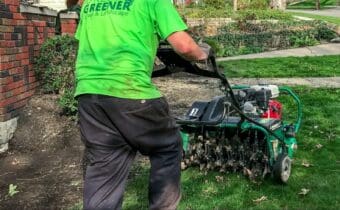
While spring aeration can relieve compaction, it is not the optimal window for cool season grass establishment. Fall is the best time for core aeration and overseeding because soil temperatures are warm, weed pressure is lower, and young grass has time to establish before summer stress.
In Mt. Lebanon’s compact clay soil, we recommend double pass aeration in early September, not April.
What this myth costs you:
- Paying for spring seeding that struggles in summer heat
- Higher irrigation demands
- Lower germination success
- Possible re seeding in fall anyway
Spring aeration should be corrective, not routine.
Myth 5: “All lawn care companies do the same thing”
National chains often operate on fixed regional calendars. They rarely perform soil testing on every property. They do not tailor programs to specific microclimates like Sunset Hills slopes or heavily shaded lots near Bird Park.
A one size fits all program ignores:
- Clay compaction levels
- Tree canopy density
- Salt damage along streets and sidewalks
- Grub pressure near sandy pockets in Peters Township
Dream Greener monitors weather patterns, soil temperatures, and insect life cycles specific to the South Hills. Our licensed applicators live here. This is not a call center model.
What this myth costs you:
- Generic treatments
- Slower results
- Frustration with communication
- Paying twice to fix what should have been done right
Myth 6: “DIY is always cheaper”
On the surface, buying fertilizer, weed control, and grub preventer from a home improvement store feels cheaper.
Until:
- You improperly time crabgrass control
- You overapply nitrogen
- You miss grub prevention before May 15
- You apply fungicide after disease is already advanced
Professional programs include calibrated equipment, GPS tracked applications, licensed pesticide applicators, and continuous monitoring. Mistakes in lawn care are rarely visible immediately. The damage shows up in July.
Correcting a thin, weed infested lawn can cost significantly more than maintaining it properly from the start.
What Should Pittsburgh Homeowners Actually Do in Spring?
Focus on three priorities:
- Soil testing and proper fertility timing
- Temperature based pre-emergent crabgrass control
- Monitoring for compaction, drainage, and early disease signs
Spring lawn care in Pittsburgh is about setting up summer success. It is not about dumping product in April and hoping for the best.
If you want a month by month breakdown, check out our monthly lawn and landscape guide for Pittsburgh, Mt. Lebanon and surrounding communities.
The Bottom Line for South Hills Lawns
Most spring lawn myths revolve around doing too much, too early, without data.
At Dream Greener Lawn & Landscape, our Lawn Care Program is built specifically for Mt. Lebanon, Upper St. Clair, Bethel Park, Peters Township and surrounding South Hills neighborhoods. Every program includes:
- Custom blended fertilizer
- Pre-emergent crabgrass control based on soil temperature
- Grub prevention timed before peak hatch
- Disease monitoring during humid months
- Ongoing lawn analysis and adjustments
We have been serving the South Hills since 2013, maintain over 500 properties, and have more than 150 five star reviews from your neighbors.
If you want to avoid costly spring mistakes and see consistent results, learn more about our lawn care program here.
We would be happy to schedule a complimentary Lawn & Landscape Analysis and show you exactly what your property needs this season.
Limited time lawn care promotion
If you want fewer problems and better results this summer, spring is not the time to guess. This spring, new lawn care clients who enroll in a full-season program receive a complimentary bonus application as part of their annual plan. Check out our lawn care promotion here. Current lawn care clients can refer a friend to Dream Greener and earn a complimentary treatment added to your account. All your friend needs to do is mention your name when they reach out.