If you want a thick, resilient lawn in July, the work starts now.
Spring lawn care in Pittsburgh is not just about achieving green color. It is about preparing your turf for heat, humidity, clay soil compaction, grub pressure, and fungal disease that arrive in early summer across Mt. Lebanon, Upper St. Clair, Peters Township, and Bethel Park.
Late April is a turning point. Soil temperatures are climbing. Cool-season grasses are actively growing. What you do in the next few weeks determines how well your lawn handles summer stress.
Here is what needs to happen before the heat sets in.
Why does spring lawn care in Pittsburgh matter so much before summer?
Western Pennsylvania lawns are primarily cool-season grasses like tall fescue and Kentucky bluegrass. These grasses grow most aggressively in spring and fall. By summer, they shift into survival mode.
According to Penn State Extension, cool-season turf performs best when properly fertilized in spring but should avoid excessive nitrogen that can increase disease risk heading into summer heat. Their turfgrass management guidance emphasizes balanced fertility and correct timing for long-term health.
That timing matters here in the South Hills.
Clay-heavy soils near Bower Hill Road in Mt. Lebanon, the rolling properties of Upper St. Clair, and the compacted lots in Bethel Park all restrict root growth. If roots are shallow by June, summer drought stress shows up quickly.
Spring sets the foundation for deeper roots and stronger turf density.
 What should be done in April for a healthier Pittsburgh lawn?
Balanced fertilization, not aggressive feeding
Early spring fertilization supports green-up and root development. The key is moderation.
Overfeeding in April can push excessive top growth, which makes lawns more vulnerable to brown patch and dollar spot as humidity increases in June and July. A science-based program uses soil testing to determine what your lawn actually needs instead of applying a generic blend.
Dream Greener Lawn & Landscape can test your property and custom-blends fertilizer based on soil data. That is especially important in Mt. Lebanon’s compact clay where pH imbalances are common.
Broadleaf weed control before weeds mature
Dandelions, clover, and chickweed are actively growing now.
Targeted post-emergent control in late April prevents these weeds from setting seed and spreading further into Peters Township and Upper St. Clair neighborhoods. Early control also reduces stress on turf before summer.
Monitoring soil temperature and crabgrass prevention
Crabgrass germinates when soil temperatures reach approximately 55 degrees Fahrenheit for several consecutive days.
Penn State Extension explains that proper pre-emergent timing is based on soil temperature, not calendar date. Missing that window allows crabgrass to establish before summer.
In most Pittsburgh seasons, that threshold is reached between mid-March and mid-April. By late April, prevention should already be in place. If it is not, monitoring becomes critical.
Preparing for grub prevention
Japanese beetle grubs are a recurring issue in Peters Township and Upper St. Clair, particularly in sandy soil pockets. Preventive grub control is applied from mid-May through the end of June for best effectiveness in our region.
Waiting until visible damage appears in August is often too late. Spring planning prevents fall lawn collapse.
Correct mowing height before summer
Mowing height directly affects summer survival.
For cool-season lawns in Pittsburgh, mowing at 3 to 3.5 inches going into summer encourages deeper root systems and shades soil to reduce moisture loss. Scalping lawns in April creates shallow roots and heat vulnerability by July.
Consistent mowing also reduces disease pressure and improves overall turf density.
How does April connect to summer disease prevention?
Pittsburgh summers bring humidity levels that create ideal conditions for brown patch and dollar spot. Excess nitrogen, poor mowing habits, and shallow roots increase vulnerability.
Spring lawn care sets three important defenses:
- Balanced fertility
- Strong root depth
- Proper turf density
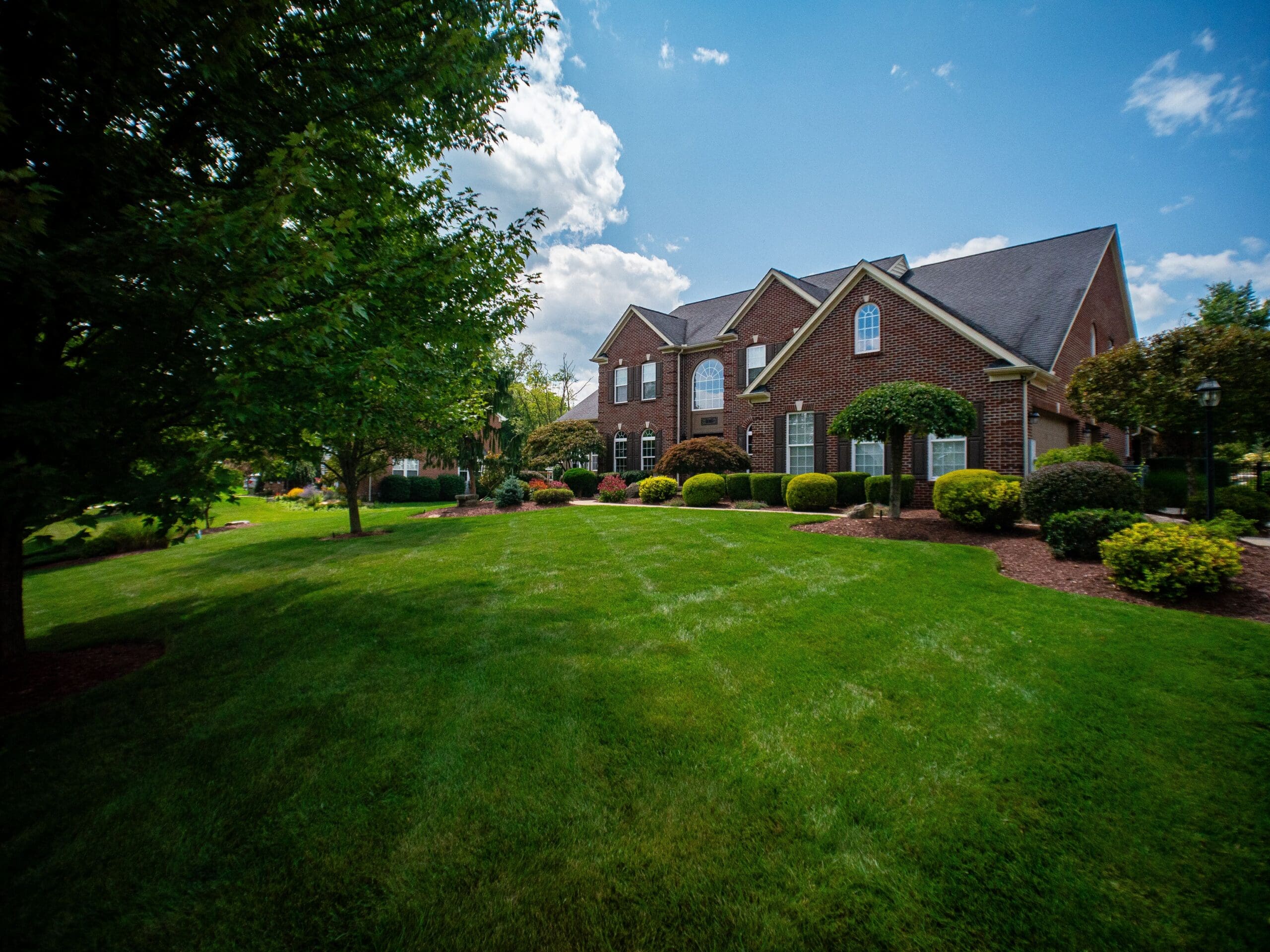
When these are in place, lawns in Mt. Lebanon, Upper St. Clair, and Peters Township handle July heat far more effectively.
If you want a month-by-month breakdown of what happens next, our Pittsburgh Area Monthly Lawn Guide provides a detailed seasonal roadmap.
Frequently Asked Questions About Spring Lawn Care in Pittsburgh
When is it too late to start spring lawn care in Pittsburgh?
It is rarely too late to start, but earlier is better. Ideally, fertilization and crabgrass prevention are in place by mid-April when soil temperatures reach 55 degrees. Starting in late April still allows for strong summer preparation, especially if grub prevention and balanced fertilization are applied correctly. Programs can be adjusted based on current lawn condition.
Should I fertilize my lawn again in May?
Possibly, but not automatically. Cool-season turf benefits from consistent but moderate feeding. Applying excessive nitrogen close to summer can increase fungal risk. A soil test determines whether additional nutrients are necessary. Customized programs prevent over-application and reduce disease pressure heading into humid months.
What mowing height is best before summer in Mt. Lebanon and Upper St. Clair?
For most cool-season lawns in the South Hills, 3 to 3.5 inches is ideal entering summer. Taller turf shades soil, reduces evaporation, and supports deeper roots. Lawns cut too short in April often struggle by July. Consistency is more important than occasional height changes.
When should grub prevention be applied in the Pittsburgh area?
Preventive grub control should be applied by May 15 in Western Pennsylvania. Japanese beetles lay eggs in early summer, and preventive products target larvae before root feeding begins. Waiting until visible damage appears in late summer reduces effectiveness significantly.
How long before I see results from spring lawn treatments?
Initial green-up can occur within 7 to 14 days depending on temperature and moisture. Weed control improvements are often visible within two to three weeks. Density and resilience improvements build through late spring and early summer. Long-term results strengthen over consecutive seasons of consistent care.
Limited-Time Lawn Care Promotion Ending in May
If you want fewer problems and better results this summer, spring is not the time to guess.
For a limited time, new lawn care clients who enroll in a full-season program receive a complimentary bonus application as part of their annual plan. This promotion ends in May.
Current lawn care clients can refer a friend to Dream Greener and earn a complimentary treatment added to your account. All your friend needs to do is mention your name when they reach out.
Spring lawn care in Pittsburgh is about preparation, not reaction. The next few weeks determine how your lawn performs when summer stress arrives.