Late spring in Pittsburgh's South Hills is when lawn fungus and insect problems quietly take hold. The combination of warming soil temperatures, frequent rain, and lingering humidity creates the exact conditions that fungal pathogens and turf-damaging insects need to establish themselves. By the time most homeowners notice brown patches, thinning grass, or irregular discoloration, the damage is often weeks old.
The good news? Most late spring lawn diseases and pest issues are preventable when you know what to look for and when to act. At Dream Greener Lawn & Landscape, our licensed plant health care technicians and certified arborist have been diagnosing and treating lawn fungus and insect damage across Mt. Lebanon, Upper St. Clair, Bethel Park, and the surrounding South Hills since 2013. With over 150 five-star Google reviews, our science-based approach focuses on accurate diagnosis first, then targeted treatment only where it is needed.
This guide covers the most common fungal diseases and insect pests that affect South Hills lawns in May and early June, how to identify them early, and the cultural practices and professional treatments that keep them from spreading.
Why Is Late Spring a High-Risk Window for Lawn Disease in Pittsburgh?
Pittsburgh sits in USDA Hardiness Zone 6b, and our South Hills neighborhoods experience a unique set of conditions that make late spring particularly problematic for turf health. Daytime temperatures in May typically range from the mid-60s to mid-70s, with overnight lows in the upper 40s and 50s. That temperature swing, combined with Pittsburgh's average 3.5 to 4 inches of rainfall in May, keeps grass blades damp for extended periods.
Fungal pathogens thrive in prolonged leaf wetness. According to Penn State Extension's lawn management guide, turfgrass diseases can be difficult or even impossible to control if they are not recognized at an early stage of development. That is why proactive monitoring matters more than reactive treatment.
South Hills properties also deal with heavy clay soils that hold moisture longer than sandy or loamy soils. In neighborhoods like Virginia Manor, Sunset Hills, and along Bower Hill Road, compacted clay combined with mature tree canopies creates shaded, damp microclimates where fungal activity accelerates. Properties near Washington Road and throughout Mission Hills face similar challenges where poor drainage and limited airflow compound the problem.
What Are the Most Common Late Spring Lawn Diseases in the South Hills?
Several fungal diseases become active in our area during May and June. Here are the ones our plant health care team encounters most frequently on South Hills properties.
Red Thread (Laetisaria fuciformis)
Red thread is one of the most common lawn diseases in Pennsylvania during late spring. It thrives when temperatures hover between 60 and 75 degrees with high humidity, which describes most of May in the South Hills. You will notice irregular patches of grass that appear tan or bleached, and up close you will see distinctive pinkish-red, thread-like strands binding the tips of grass blades together. Perennial ryegrass and fine fescue, both common in Pittsburgh lawns, are especially susceptible.
Red thread is often a sign of low nitrogen fertility. Lawns that were not fertilized in early spring or that have thin, nutrient-starved turf are more vulnerable. The good news is that red thread rarely kills grass. It weakens it, but proper fertilization and improved cultural practices typically resolve the issue without fungicides.
Dollar Spot (Clarireedia jacksonii)
Dollar spot shows up as small, silver-dollar-sized patches of straw-colored grass that can merge into larger irregular areas if left unchecked. It is most active from late spring through fall, and it favors lawns with low nitrogen, heavy dew, and poor air circulation. Individual grass blades will have light tan lesions with reddish-brown borders. In the early morning, you may spot a fine, cobweb-like fungal growth over affected patches before the dew dries.
Brown Patch (Rhizoctonia solani)
While brown patch is primarily a summer disease, it can begin developing in late May when overnight temperatures stay above 65 degrees and humidity spikes. It creates circular or irregular brown patches that can be anywhere from a few inches to several feet across. Tall fescue lawns are particularly vulnerable. Over-fertilization with fast-release nitrogen in spring actually increases the risk, which is one reason Dream Greener uses custom-blended, slow-release fertilizers calibrated to each property's soil test results.
Leaf Spot and Melting Out (Drechslera / Bipolaris)
Leaf spot is a spring disease that produces small, reddish-brown spots on grass blades, sometimes with light-colored centers. In cool, wet weather during April and May, the infection can progress into a more destructive phase called "melting out," where it attacks the crown and roots of the plant, causing entire sections of turf to collapse. Kentucky bluegrass lawns are the most common target. This disease thrives in lawns that have been mowed too short, so maintaining a 3 to 3.5 inch mowing height during spring is an important preventive step.
What Lawn Insects Should South Hills Homeowners Watch For in Late Spring?
While fungal diseases get most of the attention, insect pests are equally capable of destroying a South Hills lawn. Late spring is a critical window for prevention because many of these pests are in early life stages when they are easiest to control.
White Grubs (Japanese Beetle, European Chafer, June Bug Larvae)
White grubs are the most destructive subsurface lawn pest in the South Hills. These C-shaped larvae feed on grass roots just below the surface, and the damage often is not visible until August or September when large sections of turf turn brown and can be rolled back like carpet. According to Penn State Extension's white grub factsheet, a good indication of a grub infestation is the presence of skunks, crows, or moles feeding on turf.
Early June is the ideal time for preventive grub control. Products need to be in the soil before adult beetles lay their eggs in mid-summer. Waiting until you see grub damage in late summer means the window for effective prevention has already passed. Our lawn care programs include properly timed grub prevention as part of our integrated pest management approach.
Chinch Bugs
Chinch bugs are tiny (about 1/8 inch), black insects with white wings that pierce grass blades and suck out plant fluids while injecting a toxin that blocks the plant's water supply. They overwinter in leaf litter and thatch, and they become active as temperatures warm in late spring. Damage typically appears as irregular patches of yellowing grass that turn brown, often starting near driveways, sidewalks, and other heat-absorbing surfaces. Chinch bug damage is frequently mistaken for drought stress, which is why professional diagnosis matters.
Reducing excessive thatch through core aeration and maintaining a healthy, well-fertilized lawn are the best defenses against chinch bugs. Properties with more than a half-inch of thatch provide ideal habitat for chinch bug populations to establish and grow.
Sod Webworms
Sod webworms are the larval stage of small, tan-colored lawn moths that you may notice flying in short, jerky patterns over your grass at dusk. The larvae build silk-lined tunnels in the thatch layer and feed on grass blades at night, creating irregular brown patches. Their first generation typically emerges in May and June. Early detection is key because infestations multiply quickly. If you notice birds frequently pecking at your lawn or small holes appearing in turf, that can signal sod webworm activity.
How Can You Spot Lawn Problems Early Before They Spread?
The difference between a minor lawn issue and a major renovation project often comes down to timing. Here are practical steps for early detection on your South Hills property:
- Walk your lawn weekly. Get off the patio and actually walk through different areas of your yard, especially shaded spots, low-lying areas, and sections near driveways or walkways. Look for patches of discolored, thinning, or wilting grass that stand out from the surrounding turf.
- Get down to blade level. Many diseases and pests are not visible from a standing position. Crouch down and inspect individual blades. Look for lesions, discoloration, thread-like growths, or small insects at the base of the plant near the soil.
- Do the tug test. If you suspect grub damage, grab a handful of grass in a brown patch and pull. If the turf lifts easily with no root resistance, grubs have been feeding on the root system. Fungal diseases will typically leave the roots intact even though the blades are discolored.
- Check in the morning. Many fungal diseases are most visible in the early morning before dew dries. Dollar spot's cobweb-like mycelium, red thread's pinkish strands, and brown patch's "smoke ring" border are all easier to see while grass is still wet.
- Watch for animal activity. Increased bird activity, skunk digging, or mole tunneling often signal subsurface grub infestations. These predators are finding food in your soil.
How Do Spring Cleanup and Mulch Help Prevent Lawn Disease?
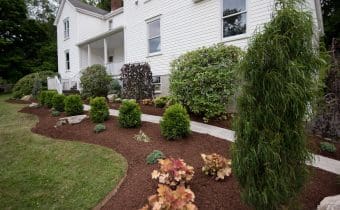
If you have not completed a spring cleanup yet, it is not too late, and it is more important than many homeowners realize for disease and pest prevention. A thorough spring cleanup removes matted leaves and debris that trap moisture against the soil surface, creating the damp, low-airflow conditions that fungal pathogens love. Clearing beds and turf edges also eliminates overwintering habitat for chinch bugs and other pests that shelter in leaf litter through the winter.
Fresh mulch is another layer of protection. Applied at the correct depth of 2 to 3 inches, mulch suppresses weeds that compete with your lawn for nutrients and water, retains soil moisture during dry stretches, and moderates soil temperature swings that stress root systems. Properly mulched beds also create a clean visual boundary that makes it easier to spot problems at the lawn's edge where disease and insect issues often start.
Dream Greener's spring cleanup and mulch services are still available through May. Our crews handle debris removal, bed preparation, hardscape clearing, and professional mulch installation as part of a comprehensive seasonal transition. If your beds are looking thin or your property still has winter debris, contact us to schedule service before the growing season is fully underway.
What Does a Science-Based Approach to Lawn Disease Prevention Look Like?
At Dream Greener, we do not apply blanket fungicide or insecticide treatments across an entire property without first understanding the problem. Our approach starts with our Lawn & Landscape Analysis, which evaluates your soil type, compaction levels, drainage patterns, thatch depth, turf species, sun and shade exposure, and existing pest or disease pressure.
From there, our licensed plant health care technicians build a customized treatment plan based on your property's specific conditions. That might include targeted fungicide applications timed to disease pressure, properly timed grub prevention, cultural recommendations like adjusting mowing height or irrigation timing, and soil amendments to address underlying nutrient deficiencies that make lawns more disease-prone.
This integrated pest management approach means we use products only where and when they are needed, minimizing environmental impact while maximizing results. Our Communication Promise means you will hear from us within one business hour, and we provide digital service reports within two hours of every visit so you know exactly what was done and why.
Frequently Asked Questions About Lawn Fungus and Insect Prevention in the South Hills
What is the most common lawn disease in Pittsburgh during late spring?
Red thread is the most frequently seen lawn disease in the South Hills during late spring. It thrives in cool, humid weather between 60 and 75 degrees and targets lawns with low nitrogen. Look for pinkish-red threads on grass blade tips and irregular tan patches. A properly timed spring fertilization program is often enough to help turf outgrow mild red thread infections without the need for fungicide. Watch our educational video on red thread below for visual identification tips.
How can I tell the difference between grub damage and fungal disease?
Both create brown patches, but the root test reveals the difference. Grub-damaged grass pulls up easily with no resistance because the roots have been eaten. Fungal disease causes discoloration and thinning, but the grass typically remains rooted. Fungal patches often show distinctive patterns like rings, spots, or thread-like growth and may appear slimy or greasy when wet. Brown patches with nearby animal digging usually indicate grubs. Our licensed technicians diagnose the specific issue during your property evaluation so the right treatment is applied.
When should I apply grub prevention in the Pittsburgh area?
Preventive grub control should be applied by early June in the South Hills, before adult Japanese beetles, European chafers, and June bugs emerge to lay eggs. Preventive products work by targeting newly hatched larvae in the soil during mid-summer. Once visible grub damage appears in August or September, the window for that season's prevention has passed, and curative treatments are significantly less effective. Our lawn care programs time this application based on local soil temperature data, not arbitrary calendar dates.
Are lawn fungus treatments safe for kids and pets?
Yes. We follow all label requirements and industry best practices for safe application. Most treatments dry within hours, after which areas are safe for normal use by children and pets. Our integrated pest management approach emphasizes cultural practices and targeted, low-toxicity applications only where needed rather than blanket treatments, minimizing product use while maximizing results. We are happy to discuss specific products, provide safety data sheets, or modify treatments to accommodate your family's preferences. Many clients with young children or pets choose our organic or hybrid lawn care options.
Can proper mowing and watering really prevent lawn disease?
Cultural practices are the foundation of disease prevention, and they are more powerful than most homeowners realize. Mowing at 3 to 3.5 inches promotes deeper root growth and shades the soil surface, reducing the moisture and heat that pathogens need. Watering deeply and infrequently (about 1 inch per week, applied in the early morning) prevents the prolonged leaf wetness that drives fungal infections. Keeping mower blades sharp is also important because dull blades tear grass tissue, creating entry points for disease. These practices will not eliminate all risk, especially in a humid climate like Pittsburgh's, but they dramatically reduce it.
What should I do if I see chinch bug damage on my lawn?
If you notice irregular patches of yellowing grass that turn brown near sunny, heat-absorbing areas like driveways and sidewalks, chinch bugs may be the cause. Before treating, confirm the diagnosis by parting the grass at the edge of a damaged area and looking for tiny black insects with white wings at the base of the blades. A soap drench test (mix a tablespoon of dish soap in a gallon of water and pour over a square yard of turf) will bring them to the surface within minutes. If confirmed, professional surface insect treatment is recommended because chinch bugs reproduce rapidly and over-the-counter products often require precise timing and application rates to be effective.
Is it too late to get a spring cleanup and mulch installed in May?
Not at all. May is actually an ideal time for spring cleanup and mulch in the South Hills. Clearing debris and old leaf litter removes the moisture-trapping, pest-harboring conditions that fuel early-season problems. Fresh mulch applied at the proper 2 inch depth suppresses weeds, retains soil moisture, regulates soil temperature, and gives your beds a clean, finished appearance. Our crews are actively scheduling spring cleanup and mulch installation through the end of May. Contact us to get on the schedule before the summer growing season kicks into full gear.
Does Dream Greener offer lawn disease and pest prevention programs?
Yes. Our Tree and Plant Health Care program and lawn care programs include targeted disease monitoring and treatment, properly timed grub prevention, surface insect control, and ongoing property evaluations throughout the growing season. Every property starts with our complimentary Lawn & Landscape Analysis, which identifies existing conditions and risk factors so we can build a customized plan. Our licensed technicians monitor your property throughout the season and adjust treatments based on what we see in the field, not a one-size-fits-all schedule. Dream Greener has served the South Hills since 2013 with an ISA-certified arborist on staff and licensed plant health care professionals.
Protect Your South Hills Lawn Before Problems Take Hold
Late spring is the turning point for lawn health in the South Hills. The decisions you make now about disease prevention, grub control, and basic cultural practices determine whether your lawn thrives through summer or spends the season recovering from avoidable damage.
Dream Greener Lawn & Landscape provides science-based plant health care, lawn treatment programs, pest control, spring cleanup, and mulch services across Mt. Lebanon, Upper St. Clair, Bethel Park, Peters Township, and Pittsburgh's South Hills communities. Schedule your complimentary Lawn & Landscape Analysis today and let our licensed team evaluate your property's specific needs.
Contact us at (412) 835-1035 or visit dreamgreener.com/contact to get started.