When most homeowners think about hardscaping, patios, fire pits, and paver walkways usually come to mind first, and for flat, well-drained yards, that’s often exactly where a project should start. But a lot of South Hills properties aren’t flat or well-drained. Sloped lots along Chartiers Creek in Presto, hillside yards throughout Mt. Lebanon, and clay-heavy soil across Peters Township create drainage and erosion problems that no amount of patio or walkway design solves on its own. For these properties, retaining walls and drainage solutions aren’t an upgrade. They’re the hardscaping project that makes everything else possible.
Why Do Sloped Pittsburgh Properties Need Retaining Walls?
Retaining walls hold back soil on a slope, creating usable, level space where there previously wasn’t any, while also slowing water runoff that would otherwise erode hillside soil during heavy rain. In Mt. Lebanon and Upper St. Clair specifically, where mature neighborhoods sit on rolling terrain, a retaining wall often turns an unusable sloped side yard into space for a patio, a planting bed, or simply a stable foundation that stops soil from washing toward the house with every storm. Materials range from natural stone to segmental concrete block, and the right choice depends on wall height, load requirements, and the look you’re going for alongside existing hardscape or landscaping.
What Drainage Solutions Pair With Hardscaping?
Retaining walls alone don’t solve water problems if the water has nowhere to go once it’s redirected. French drains move water underground away from foundations and low spots, while dry creek beds handle surface water visibly and attractively, often doubling as a landscape design feature rather than just infrastructure. Grading adjustments reshape the land itself to direct water where it belongs, and rain gardens capture and slowly absorb runoff in a planted, functional area rather than letting it pool or erode. We frequently pair these drainage solutions with a new patio or paver walkway project, since solving water movement first protects the hardscaping investment that goes in afterward. Every drainage plan is custom quoted based on a property assessment, since the right solution depends entirely on grade, soil, and where water is actually causing problems.
How Does This Fit Into a Larger Hardscaping Project?
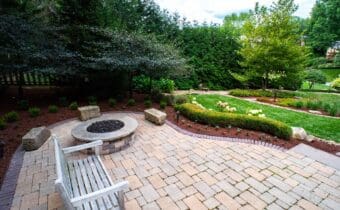
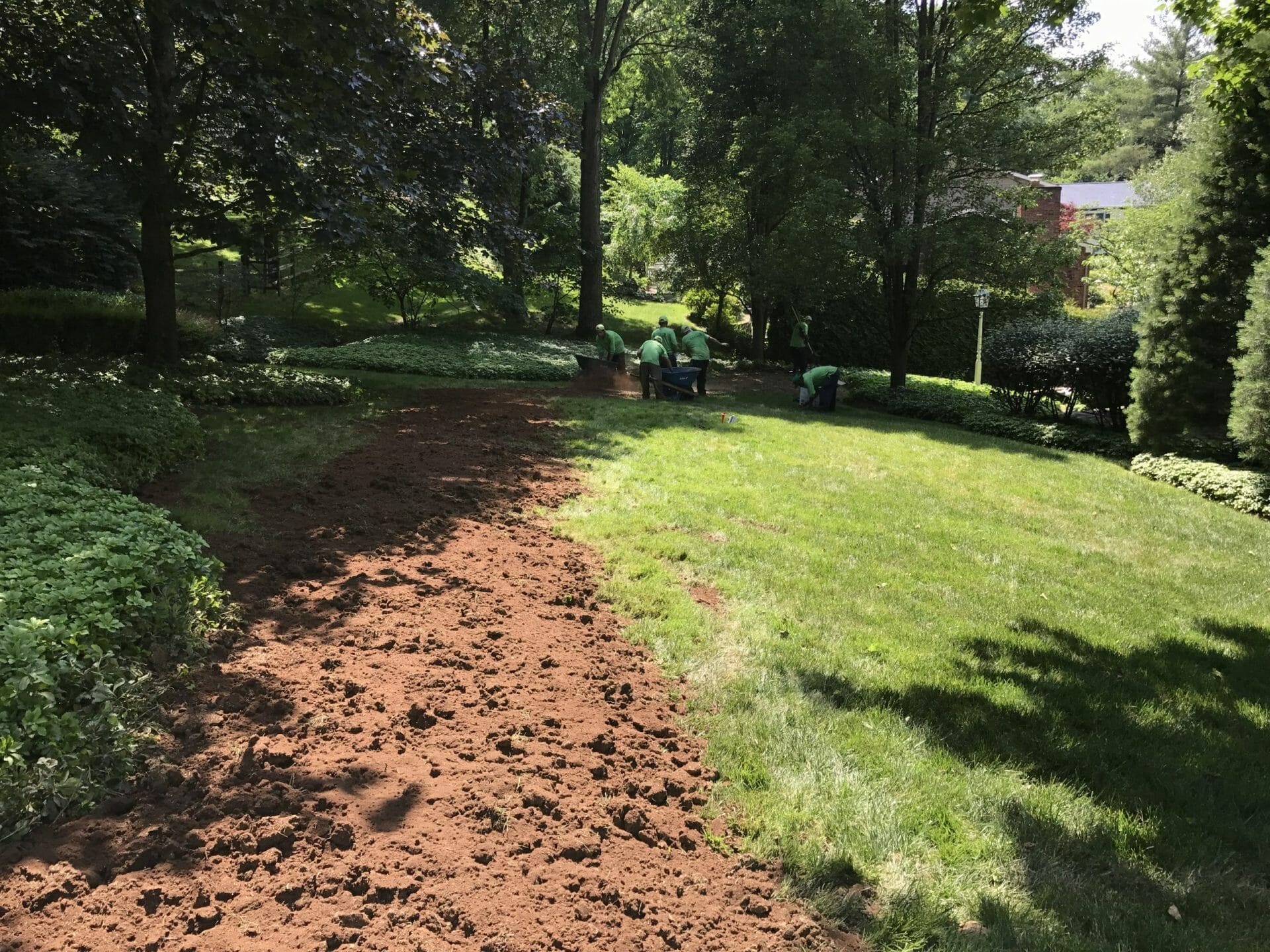
Retaining walls and drainage work often become the foundation for a broader outdoor living project. Once a slope is stabilized and water is managed, that same space frequently becomes home to a patio, a paver walkway connecting different areas of the yard, an outdoor kitchen, or a fire pit and seat wall combination for a finished gathering space. We see this sequence often: a homeowner calls about a drainage problem or an unusable sloped yard, and the conversation expands into a full hardscape plan once they realize the space that opens up. Planning both phases together, even if construction happens in stages, generally produces a more cohesive result than tackling drainage and hardscaping as separate, unrelated projects.
When Should You Start Planning?
Late fall is a practical time to begin. Ground conditions are still workable in most years through November, and our scheduling has more flexibility than during the spring and summer rush. Starting the consultation and design process now, even if construction is planned for early spring, means your project is ready to build as soon as weather allows rather than waiting in a spring backlog. For sloped or drainage-troubled properties especially, addressing the underlying grading issue before another winter of freeze-thaw cycles and spring runoff is worth the head start.
Schedule Your Hardscape Consultation
Frequently Asked Questions About Retaining Walls and Drainage in Pittsburgh
How do I know if I need a retaining wall or just better drainage?
If your yard has usable but poorly draining flat areas, drainage solutions like French drains or grading adjustments are often enough on their own. If the issue is an unusable slope or soil actively eroding or sliding, a retaining wall is typically necessary to create stable, level space, sometimes alongside drainage work. A site assessment is the most reliable way to know which applies to your property.
What material is best for a retaining wall in Pittsburgh’s climate?
Segmental concrete block and natural stone both perform well through our freeze-thaw winters when properly installed with adequate drainage behind the wall, which prevents water pressure buildup that causes wall failure over time. Choice often comes down to budget, wall height, and how the wall should coordinate with existing patio, walkway, or landscape design.
Can a retaining wall project include a patio or walkway too?
Yes, and it often should. Once a wall creates level, stable ground, that space is a natural location for a patio, paver walkway, or even a fire pit and seating area. We design retaining wall projects with future hardscape phases in mind whenever a client has broader plans, even if only the wall gets built initially.
How much does a retaining wall or drainage project cost?
Cost depends on wall height, length, material, site accessibility, and how much drainage work is involved, so we provide custom quotes after an on-site assessment rather than a general price range that wouldn’t be accurate for your specific slope and soil conditions.
Is fall or winter a bad time to do this kind of hardscaping?
Not necessarily. Ground conditions typically remain workable into late fall, and cooler temperatures don’t affect wall or drainage installation the way they might affect certain plantings. Many projects that start design and permitting now are positioned to build as soon as conditions allow in early spring, ahead of the busier season.