Fall feels like the natural time to tidy up the landscape, and for a lot of plants, it is. But one of the most common calls we get every October comes from homeowners who pruned their forsythia, lilac, or rhododendron back this time of year and then wondered why it barely bloomed the following spring. The plant wasn’t damaged. It simply had its flower buds removed before they got the chance to open. Knowing which plants to prune now, and which to leave alone until later, makes the difference.
Why Does Fall Pruning Remove Next Year’s Flowers?
Spring-blooming shrubs, including forsythia, lilac, azalea, and rhododendron, set their flower buds during the previous summer, well before fall arrives. Those buds sit on the branches all winter, dormant, waiting for spring to open. If you prune those branches in fall, you’re not just shaping the plant, you’re cutting off the flowers it already prepared. The shrub survives fine. It just skips its spring show, sometimes for more than one season if pruning is aggressive. This is one of the most common landscaping mistakes we see in Mt. Lebanon and Upper St. Clair yards each fall, usually from good intentions and a tidy-looking yard.
What Can You Safely Prune This Fall?
Dead, damaged, or diseased wood should come off any time of year, fall included, since removing it prevents disease spread and eliminates hazards regardless of season. Summer-blooming shrubs, such as rose of sharon, butterfly bush, and certain hydrangea varieties, generally tolerate fall or late-winter pruning since they bloom on new growth produced the following season. Most shade and ornamental trees also handle structural pruning well in late fall through winter, once they’ve gone dormant and their branch structure is easier to see without leaves in the way. Penn State Extension’s guide to pruning ornamental plants breaks the timing down species by species. When in doubt about a specific plant in your landscape, that’s a fair question for our ISA-certified arborist during a fall assessment, since timing genuinely varies by species.
What Should Wait Until Later?
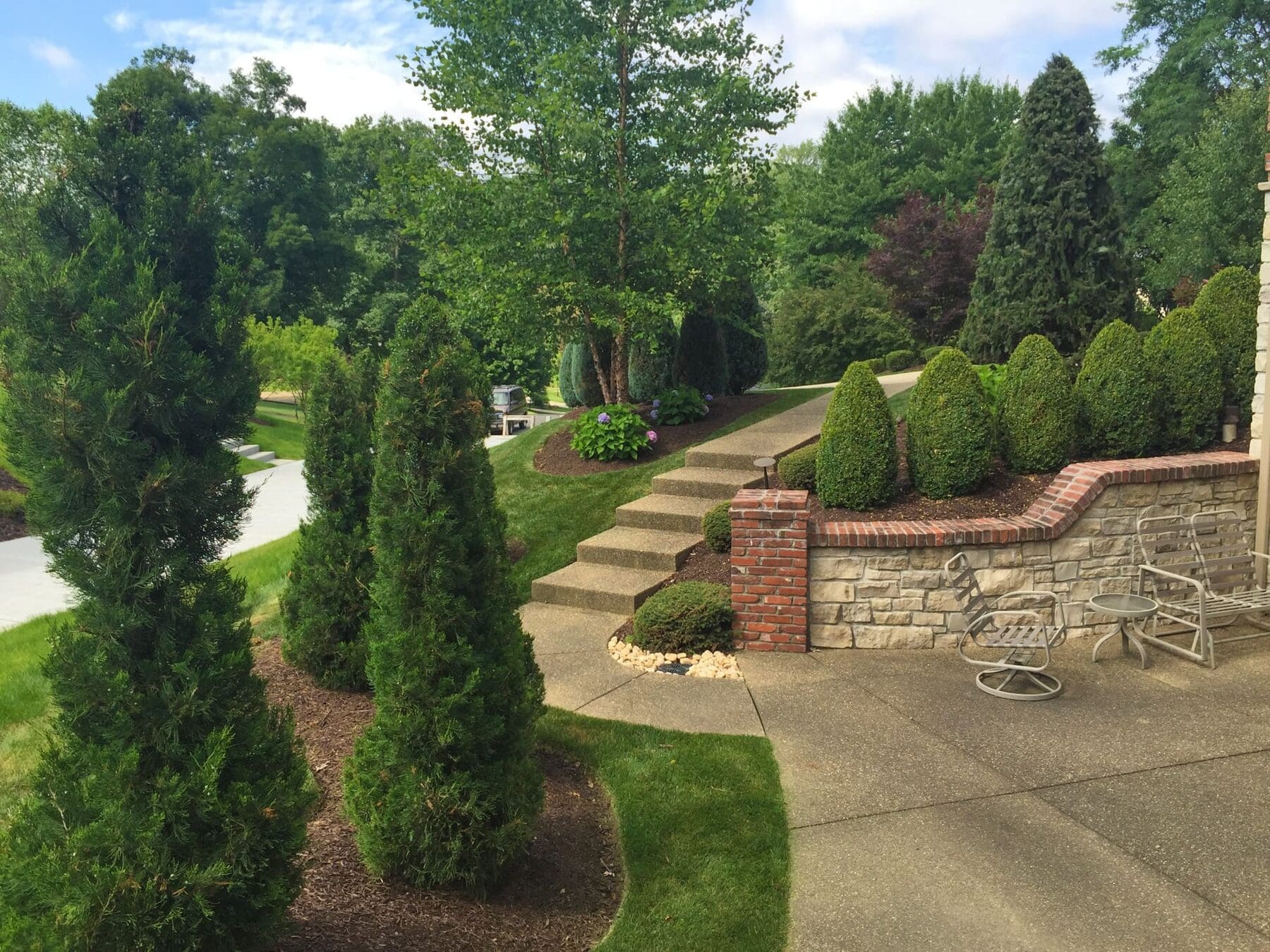
Spring bloomers are the main category to leave alone until immediately after they finish flowering next year, which preserves the buds they’re currently developing. Evergreens are typically best shaped in late spring after new growth hardens, rather than in fall. And broad structural cuts on any plant are best avoided right before winter if the plant hasn’t fully hardened off for the season, since fresh cuts can be more vulnerable to cold damage in the weeks immediately following. If you’re not sure which category a plant in your yard falls into, we’d rather answer that question than have you guess. Our post on winter tree pruning in Pittsburgh covers what dormant season work looks like once the leaves are down.
Does Fall Mulching Play a Role Here Too?
It does, though for a different reason than spring mulching. Where our spring mulching guide focuses on weed suppression and moisture retention through summer heat, a fall mulch refresh is more about insulation. A proper two-to-three-inch layer around root zones helps buffer soil temperature swings during Pittsburgh’s freeze-thaw cycles, which can otherwise heave shallow-rooted plants and stress roots through winter. It’s a smaller, quieter benefit than spring mulching’s visual refresh, but for newly planted or younger shrubs especially, that insulation matters heading into their first winter.
Schedule Your Lawn & Landscape Analysis
Frequently Asked Questions About Fall Pruning in Pittsburgh
How do I know if my shrub is a spring bloomer or summer bloomer?
The simplest test is timing: if it flowered in April, May, or early June this year, it’s very likely a spring bloomer that’s already forming next year’s buds and shouldn’t be pruned heavily until right after its bloom finishes. If it flowered mid-summer or later, fall or late-winter pruning is usually safe. Our team can identify specific varieties during a landscape assessment if you’re unsure.
I already pruned my forsythia this fall. Did I ruin it?
No. The shrub itself is unaffected and will grow normally. You’ll simply see fewer blooms next spring, proportional to how much was removed, and full bloom typically returns the following year once new buds have a full season to develop. It’s a missed season, not lasting damage.
When is the best time for dormant pruning on trees?
Late fall through late winter, once trees have dropped their leaves, is generally the strongest window for structural pruning. Bare branches make it much easier to see and correct crossing limbs, weak angles, or storm damage risk, and trees are less stressed by pruning cuts while dormant.
Should I mulch before or after fall cleanup?
After. Clear fallen leaves and debris from beds first, then apply your fall mulch refresh so it isn’t sitting on top of decomposing leaf litter, which can trap excess moisture against plant crowns and roots.
Can Dream Greener tell me what’s safe to prune on my specific property?
Yes. Our ISA-certified arborist and licensed technicians evaluate pruning needs by species and condition during a Lawn & Landscape Analysis, and we’ll walk your property with you if there’s any plant you’re unsure about before cutting anything.