Most homeowners plan their planting projects for spring, assuming that’s simply when landscaping happens. In reality, fall gives trees, shrubs, and many perennials a head start that spring planting can’t match. Cooling air combined with soil that’s still warm from summer creates conditions that favor root establishment over top growth, which is exactly what a newly planted tree or shrub needs before facing next year’s heat. If you’ve been holding off on landscape enhancements until spring, here’s why that plan might be working against you.
What Makes Fall Soil Better for New Plantings?
Soil temperature lags behind air temperature by several weeks, so Pittsburgh soil in September and October often stays in the 50s and 60s even as daytime air cools. That warmth keeps root growth active while the plant’s above-ground growth slows for dormancy, meaning energy goes into establishing a strong root system rather than producing leaves that need constant watering. Compare that to spring planting, when a new tree or shrub has to develop roots and push out growth at the same time, right as Pittsburgh’s summer heat and humidity arrive to stress it. Fall-planted trees and shrubs typically enter their first summer with a more established root system already in place.
Penn State Extension’s planting guidance emphasizes that planting depth and root-ball preparation matter as much as timing, which is a large part of why professional installation outperforms a weekend project on clay-heavy South Hills soil.
What Should You Plant This Fall in the South Hills?
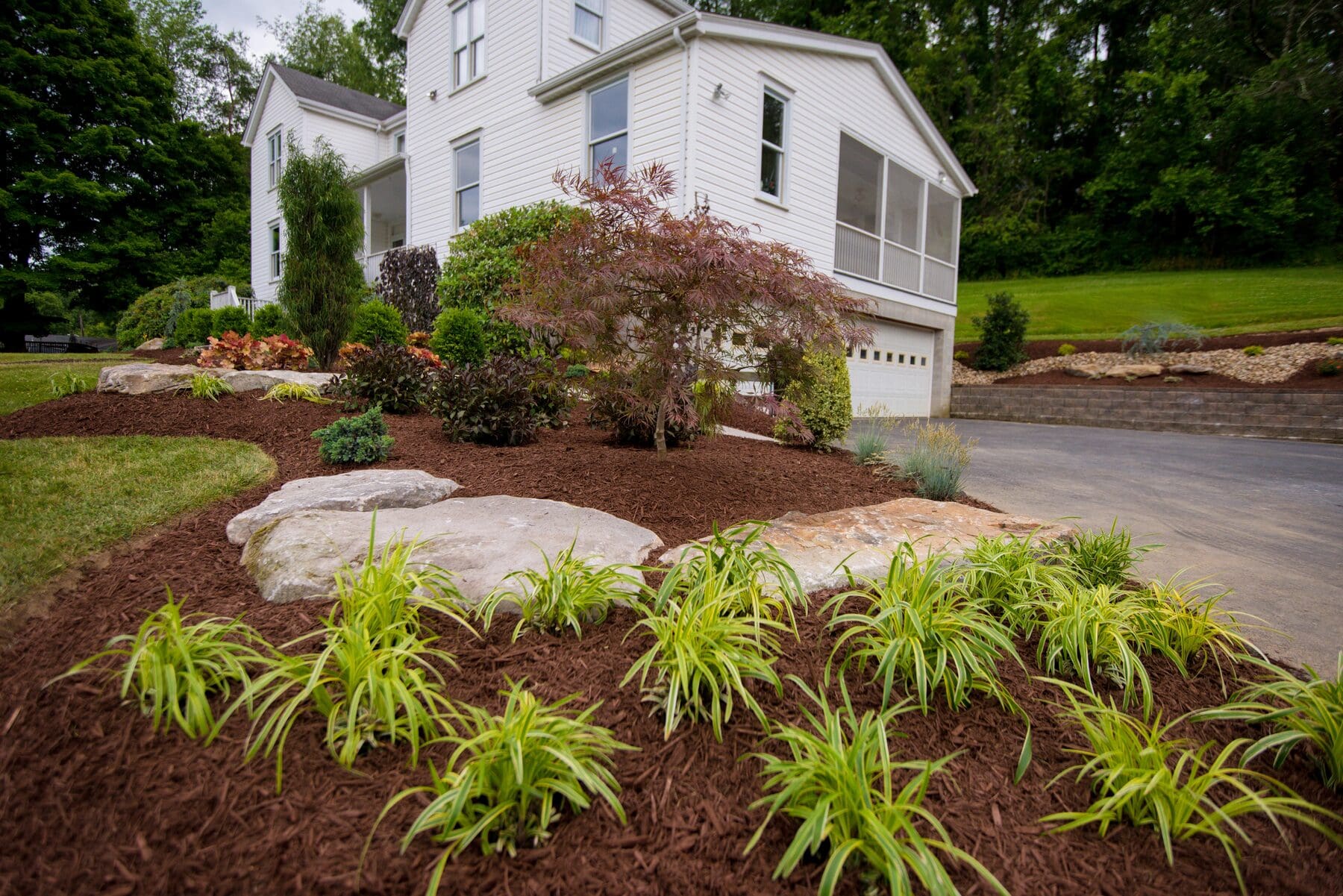
Deciduous trees and shrubs are the strongest fall planting candidates, since they’re heading into dormancy and can focus entirely on root development. Evergreens, including hollies, boxwoods, and dwarf conifers, also transplant well in fall and add structure and color through winter months when most other plantings go dormant and bare. For color, many hardy perennials establish well now too, including coneflower, sedum, and ornamental grasses suited to Mt. Lebanon and Upper St. Clair‘s clay soil conditions. We generally recommend avoiding tender or borderline-hardy perennials this late in the season, since they won’t have time to establish before frost.
Is There a Cutoff Date for Fall Planting?
Yes. As a general rule, plan to have new plantings in the ground at least six weeks before the ground freezes, which in the Pittsburgh area typically means wrapping up by mid-to-late October for most trees and shrubs. Planting later doesn’t necessarily kill the plant, but it significantly reduces root establishment time and increases winter stress risk, particularly for anything without an established root ball. If you’re planning a larger landscape enhancement, scheduling your consultation in September gives our team enough lead time for installation before that window closes.
How Does Fall Planting Fit Into a Larger Landscape Enhancement?
Fall is also a practical time to reassess your landscape’s overall design, not just add individual plants. With summer growth fully in and the season’s stresses visible, thin spots, sun-scorched areas, plants that struggled, it’s easier to see where a foundation planting needs filling in or where a bed could use restructuring. Many clients use fall consultations to plan enhancements that get installed now for root establishment, with additional phases planned for next spring once budgets or design decisions are finalized. Our post on planning fall landscape projects in Pittsburgh covers how that sequencing typically works.
Because Dream Greener maintains its own on-site nursery, the plants specified for your project are selected for how they actually perform in South Hills conditions and held for your installation date rather than substituted at the last minute when a supplier runs short.
Frequently Asked Questions About Fall Planting in Pittsburgh
Is it too late to plant in October in Pittsburgh?
Not usually. Early to mid-October remains a good window for most trees, shrubs, and evergreens, as long as planting happens roughly six weeks before the ground freezes. Late October and beyond narrows your options to hardier, well-established nursery stock. Our team can tell you during a site visit whether a specific plant and planting date still works for your property.
Do fall-planted trees need less watering than spring-planted ones?
They still need consistent watering through fall, generally about an inch per week including rainfall, until the ground freezes. What they don’t face is the added stress of summer heat during establishment, which is where spring plantings often struggle. Reduced watering demands come the following summer, once fall-planted root systems are already established.
What South Hills neighborhoods see the most fall planting activity?
We see strong fall planting demand throughout Mt. Lebanon, Upper St. Clair, and Peters Township, often from homeowners refreshing foundation plantings or adding privacy screening before winter. Newer developments in Presto and South Fayette also frequently need fall planting to establish plants in builder-grade soil that lacks organic matter.
Can you plant new sod or grass at the same time as fall landscape plantings?
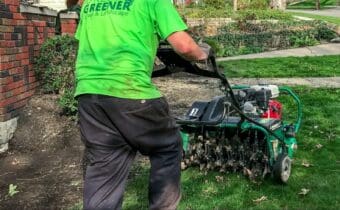
Yes, and early fall is actually the strongest window for both. If your project involves lawn areas near new plantings, we can coordinate aeration, overseeding, and planting installation in the same visit for efficiency, though each has its own optimal timing within the fall season.
Should I wait until spring to plan my landscape enhancement instead?
You can, but you’ll lose an entire season of root establishment for anything that could go in this fall. We recommend a fall consultation regardless of when you plan to install, since it lets us evaluate your property under its most stressed conditions of the year and build a plan around what actually needs attention.