If you’ve had your lawn aerated before, you already know the routine: a machine pulls small plugs of soil, your yard looks a little rough for a week, and the grass grows thicker afterward. That part is still true this fall. But for South Hills properties sitting on compacted clay, aeration alone only solves half the problem. Compost topdressing, spread across the lawn right after aeration, fills those holes with organic matter instead of air, and that difference is what separates a good fall lawn service from one that actually rebuilds your soil.
What Does Compost Topdressing Actually Do?
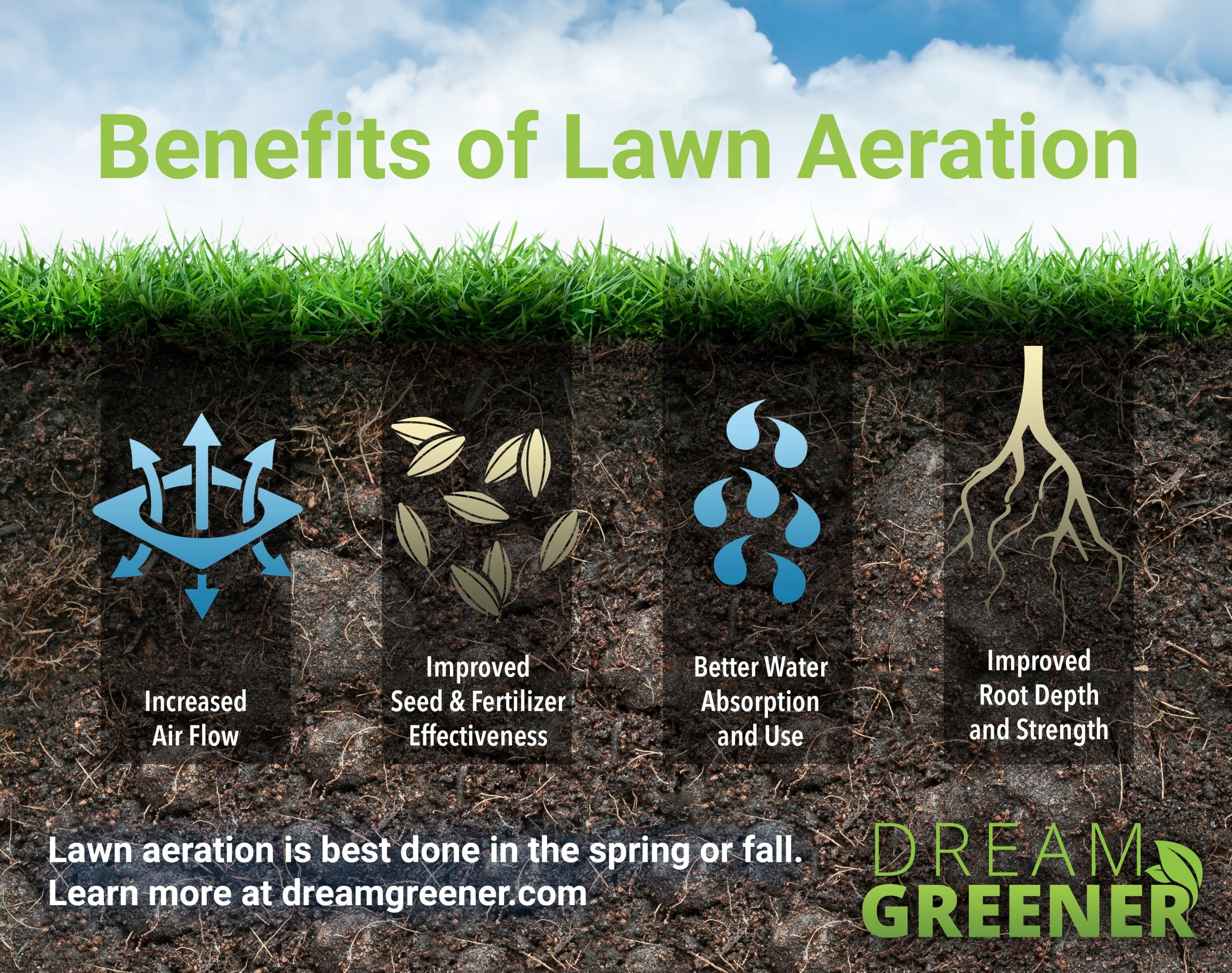
Aeration opens channels through clay soil so air, water, and nutrients can reach the root zone. Left empty, those channels close back up within a season as the surrounding clay settles. Compost topdressing, specifically the mushroom compost blend we use across Mt. Lebanon, Upper St. Clair, and Peters Township properties, gets worked into those channels and the surrounding soil surface. It introduces organic matter and beneficial microbial activity that clay soil is naturally short on, improves water infiltration, and gives new grass seed a nutrient-rich layer to root into. Instead of the aeration holes simply closing back up, they become lasting pathways for better soil structure.
Why Does This Matter More in Pittsburgh’s Soil?
Much of the South Hills, from Bower Hill Road in Mt. Lebanon to newer developments in Presto and South Fayette, sits on dense, clay-heavy subsoil. In newer construction areas especially, topsoil is often stripped or compacted by equipment during building, leaving subsoil with very little organic matter to support healthy turf. Standard aeration helps temporarily, but on soil this compacted, the benefit fades fast without something to rebuild structure underneath. Compost topdressing addresses the actual deficiency rather than just the symptom. Penn State Extension recommends soil testing as the starting point for understanding what your specific property is short on. Properties treated with combined aeration, overseeding, and compost topdressing typically show visibly thicker turf within three to four weeks, with soil improvements compounding over subsequent seasons as organic matter accumulates.
How Much Does Compost Topdressing Cost?
We price mushroom compost topdressing at $0.089 per square foot, with a $500 minimum, applied as part of your fall aeration and overseeding service. For most South Hills properties, that’s a modest addition to an already-scheduled fall service, not a separate project. Pricing depends on square footage, which we measure, so you know the exact cost before any work begins.
When Should This Happen?
Early September, specifically the first two weeks of the month, remains the optimal window for aeration and overseeding in the Pittsburgh area. That timing gives new seed enough of the growing season left to establish roots before winter dormancy, and soil moisture is typically ideal for both aeration and compost integration. Penn State Extension’s turfgrass establishment guidance points to late summer and early fall as the strongest seeding window in our region for exactly this reason. If you missed that early window, don’t skip the service. Compost topdressing can still be applied through mid-October with reduced but meaningful benefit. For a full breakdown of timing and technique, see our guide to fall aeration and overseeding in Pittsburgh.
Is Compost Topdressing Worth It Every Year?
Not necessarily for every lawn. Properties with severely compacted or nutrient-poor soil, especially newer construction lots, benefit most from annual applications for the first two to three years while soil structure rebuilds. Once organic matter levels stabilize, many clients shift to every-other-year applications as part of their ongoing lawn program. Your technician evaluates soil condition at each visit and gives you an honest answer about whether this year calls for it. Our Pittsburgh Area Monthly Lawn Guide lays out how this fits alongside the rest of the season’s services.
Schedule Your Lawn & Landscape Analysis
Frequently Asked Questions About Compost Topdressing in Pittsburgh
What is compost topdressing and how is it different from mulch?
Compost topdressing is a thin layer of finely screened organic material, in our case mushroom compost, spread across the lawn surface and worked into aeration holes. Unlike bark mulch, which is used in planting beds to suppress weeds and retain moisture, compost topdressing is designed to be absorbed into turf soil, adding organic matter and encouraging microbial activity at the root zone. It disappears into the lawn within a few weeks rather than sitting visibly on top like bed mulch.
Can I apply compost topdressing without aeration?
You can, but you’ll get a fraction of the benefit. Aeration creates channels that let compost reach several inches into compacted soil instead of sitting on the surface, where much of its value is lost to runoff or breakdown before it reaches the roots. We always pair the two services for that reason.
Will compost topdressing make my lawn look messy?
For the first few days, you’ll see a light, dark topdressing layer across the grass, similar in appearance to a thin layer of coffee grounds. It settles into the turf within one to two weeks with regular watering or rainfall, and most clients find it far less disruptive than they expect.
Does compost topdressing work with overseeding?
Yes, and the two work especially well together. The organic layer helps retain moisture around new grass seed during germination, one of the more fragile stages of establishing thick turf. Combined with double-pass aeration, this is our standard fall renovation approach for thin or patchy South Hills lawns.
How do I know if my lawn needs compost topdressing this fall?
The clearest signs are compacted, hard-feeling soil, water that pools rather than absorbs after rain, and turf that thins out despite regular fertilization. Our Lawn & Landscape Analysis includes a soil evaluation that tells you definitively whether your property would benefit this season. You can also check our Pittsburgh Area Monthly Lawn Guide for the full seasonal service calendar.