June is one of the best months of the year to be standing in a garden center. The plants are full and colorful, the selection is at its peak, and the urge to fill your landscape with something beautiful is completely understandable. But for homeowners in Mt. Lebanon, Upper St. Clair, Peters Township, and the surrounding South Hills communities, picking the right plants takes more than grabbing what looks good on the shelf.
Pittsburgh's landscape conditions are specific, and unforgiving to plants that aren't suited for them. USDA Hardiness Zone 6b means winter lows that can dip to -5°F. The South Hills region is dominated by heavy clay soils that retain moisture, compact easily, and make drainage a constant challenge. Add in the deep shade created by mature oak, maple, and beech canopies in older neighborhoods, and you quickly realize that a plant that thrives in a sunny Ohio front yard may struggle on a shaded Robinson Township road slope.
This guide walks through what actually works in Pittsburgh: the trees, shrubs, and perennials built for our zone, our soil, and our light conditions, along with what you need to know about installation to give them the best possible start.
Why Zone 6b and Clay Soil Change Everything
Most plants sold at national chain stores are labeled for broad zones and general conditions. What those labels don't tell you is how a plant will perform in the specific combination of Pittsburgh's clay-heavy subsoil, humid summers, and freeze-thaw winter cycles.
Clay soil is both an asset and a challenge. It holds nutrients well and retains moisture, but it drains slowly and compacts under foot traffic and heavy rain. Roots in poorly drained clay can suffocate, leading to slow decline or outright failure, even in plants labeled as zone-appropriate. Choosing species that tolerate or even prefer heavier, moisture-retentive soils is the first filter any smart South Hills homeowner should apply before buying a single plant.
The second filter is light. Pittsburgh's older neighborhoods, including Virginia Manor, Hoodridge, Sunset Hills, and Mission Hills, are beautifully canopied. That mature tree cover creates layered shade conditions that vary block by block, even yard by yard. A plant that needs six hours of full sun will simply languish under a 60-foot oak, no matter how carefully it's watered.
Trees That Thrive in Pittsburgh's South Hills
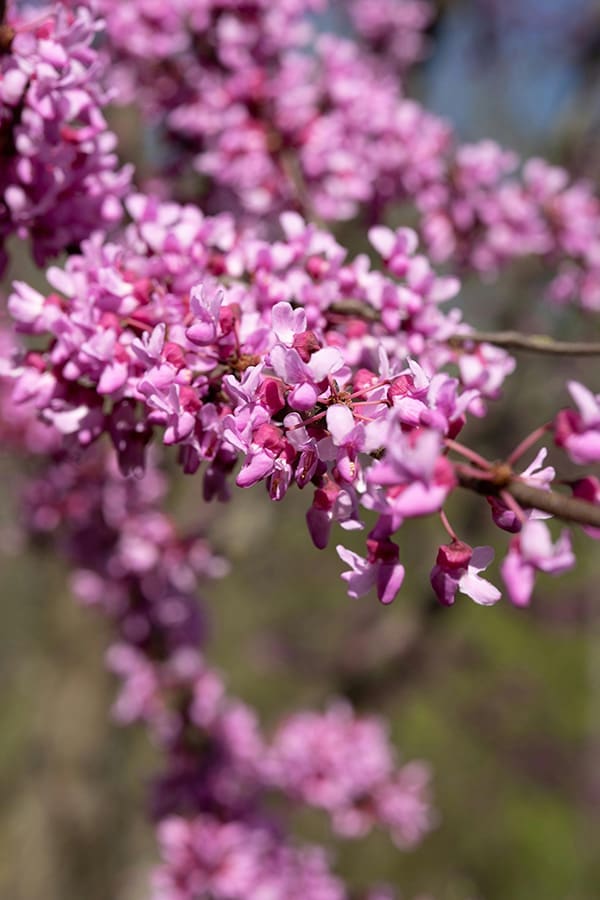 Eastern Redbud (Cercis canadensis)
One of the best small trees for South Hills properties, redbud delivers stunning magenta-pink blooms in early spring before its leaves emerge, providing a welcome contrast to Pittsburgh's gray March skies. It handles clay soils well, tolerates partial shade, and tops out at 20–30 feet, making it suitable for typical residential lots. Native to Pennsylvania, it also supports local pollinators during a critical early-season window.
Serviceberry (Amelanchier canadensis)
Serviceberry is a four-season performer: white flowers in early spring, edible berries that attract birds in early summer, rich fall foliage in orange and red, and attractive branch structure through winter. It's native to western Pennsylvania, adapted to clay soils, and works equally well as a multi-stem shrub or trained small tree. For shaded properties near wooded edges (common in Bethel Park and South Park Township), serviceberry is one of the most reliable choices available.
River Birch (Betula nigra)
For low-lying South Hills properties that collect water, river birch is one of the few trees that actually prefers consistently moist conditions. Its peeling, cinnamon-colored bark provides year-round visual interest, and it's resistant to the bronze birch borer that kills many white birch plantings in our region. Plant it with adequate space, as it can reach 40–50 feet, but in the right spot, it's virtually bulletproof.
Shrubs for Pittsburgh Landscapes: Structure, Color, and Staying Power
Oakleaf Hydrangea (Hydrangea quercifolia)
If there's one shrub that consistently outperforms expectations in shaded South Hills gardens, it's oakleaf hydrangea. It thrives in partial to full shade, handles clay soils, and produces large white flower panicles in summer that age to parchment through fall. The deeply lobed leaves turn burgundy-red in autumn, and the peeling bark provides winter interest. It's a true four-season plant that requires very little once established.
Inkberry Holly (Ilex glabra)
Inkberry is a native evergreen shrub that earns its place in any South Hills landscape. It tolerates wet, clay-heavy soils that would kill most other broadleaf evergreens, holds its dark foliage through winter, and provides reliable structure in shaded or part-shade locations. Unlike many hollies, it doesn't require a second plant for pollination when you choose self-fertile varieties. It's also resistant to most pest and disease pressure, which is important in a region where older landscapes can harbor persistent issues.
Smooth Hydrangea 'Annabelle' (Hydrangea arborescens)
For sunny to part-shade spots where you want reliable summer bloom, smooth hydrangea is a workhorse. 'Annabelle' produces massive white flower heads from June through August and is one of the most cold-hardy hydrangeas available, which matters for exposed South Hills ridge properties that take the full force of January wind. It dies back to the ground in winter and re-blooms reliably each year from new wood, so even a bad winter doesn't mean a flowerless summer.
Perennials That Perform in Zone 6b
Black-Eyed Susan (Rudbeckia fulgida)
Few perennials are as dependable or as well-adapted to Pittsburgh's conditions as black-eyed Susan. It tolerates clay soils, handles both dry spells and periods of heavy rain, blooms from July through September, and reseeds gently to fill in beds over time. It pairs beautifully with ornamental grasses and native coneflowers and is a consistent pollinator magnet through late summer.
Salvia (Salvia nemorosa)
For sunny to part-shade spots where you want reliable color without a lot of fuss, salvia is one of the most rewarding perennials in the South Hills garden. Compact, upright spikes in violet, purple, or white bloom from late spring through summer, and cutting the plant back after the first flush of flowers typically triggers a second round of bloom in late July or August. It handles Pittsburgh's clay soils and humidity well, holds up through heat without wilting, and is largely ignored by deer, which is a meaningful advantage in neighborhoods bordering wooded areas in Bethel Park, Peters Township, and South Park. Once established, it requires very little beyond an annual cutback and occasional division every few years to keep it vigorous.
Astilbe (Astilbe spp.)
Astilbe is another shade performer that flourishes in Pittsburgh's humid summers and clay soils. Its feathery plume flowers in shades of white, pink, red, and purple bloom in June and July, bringing color to areas where sun-loving perennials simply won't grow. It pairs naturally with hosta and ferns and becomes more spectacular each year as clumps divide and mature.
Coneflower (Echinacea purpurea)
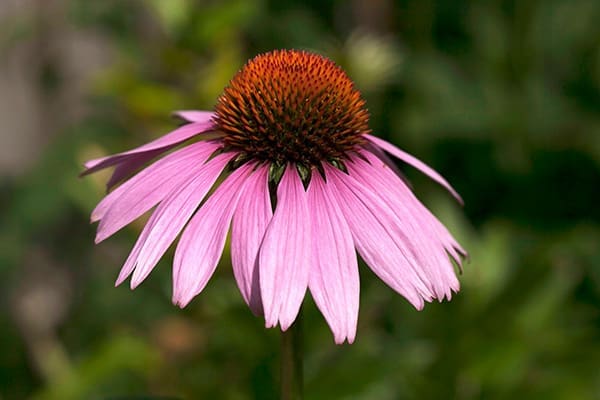
For full-sun areas with decent drainage, purple coneflower is one of the most rewarding perennials in the Pittsburgh palette. Native to eastern North America, it thrives in our climate without much intervention, blooms from late June through August, attracts butterflies and bees, and leaves seed heads through winter that feed goldfinches. It's drought-tolerant once established, a useful trait during July's heat peaks.
Why Professional Installation Matters More Than Most Homeowners Realize
Here's the part of the conversation that often gets skipped at the garden center: buying the right plant is only half the equation. How it goes in the ground determines whether it thrives or slowly declines over the next two years before you quietly pull it out and try something else.
In South Hills clay soils, planting depth and soil preparation are everything. Even a few inches too deep and the crown of the plant sits in saturated soil during heavy rains, creating the conditions for root rot. Plant too shallow and root systems desiccate in summer and heave in winter. Proper installation means excavating to the right depth, amending backfill with appropriate organic matter (not straight compost, which can actually create a perched water table in heavy clay), and spacing plants to account for mature size rather than current size.
Root zone preparation matters too. Clay soil that's been compacted by construction equipment or heavy foot traffic resists root penetration even in otherwise suitable plants. Loosening the planting area beyond the immediate hole, not just digging a container-sized divot, dramatically improves establishment rates.
Watering discipline in the first season is another place where many DIY installations come apart. New plants in clay soils are particularly vulnerable to both overwatering and underwatering; the clay holds moisture inconsistently depending on weather conditions, and what feels like a wet bed on Monday can be bone dry by Thursday after a windy stretch.
A Note on Timing: Plant Now, Before the Heat Peaks
June is still a good planting month in Pittsburgh, but the window is narrowing. Once daytime temperatures consistently push into the upper 80s and soil temps climb above 85°F, typically by mid-to-late July in our region, new plantings face significantly more stress and require much more intensive watering to establish. Getting trees and shrubs in the ground by late June gives root systems four to six weeks of warm-but-not-brutal weather to establish before the heat peak arrives.
Perennials are actually more demanding than most homeowners expect when planted in summer heat, not less. Limited root mass means they struggle significantly under July and August conditions, and for primarily perennial projects we strongly encourage waiting for a fall planting window starting in September. If summer installation is the only option, plan on watering deeply and consistently throughout the establishment period, typically every two to three days during dry stretches. This is not a set-it-and-forget-it situation.
Getting the Right Plants for Your South Hills Property
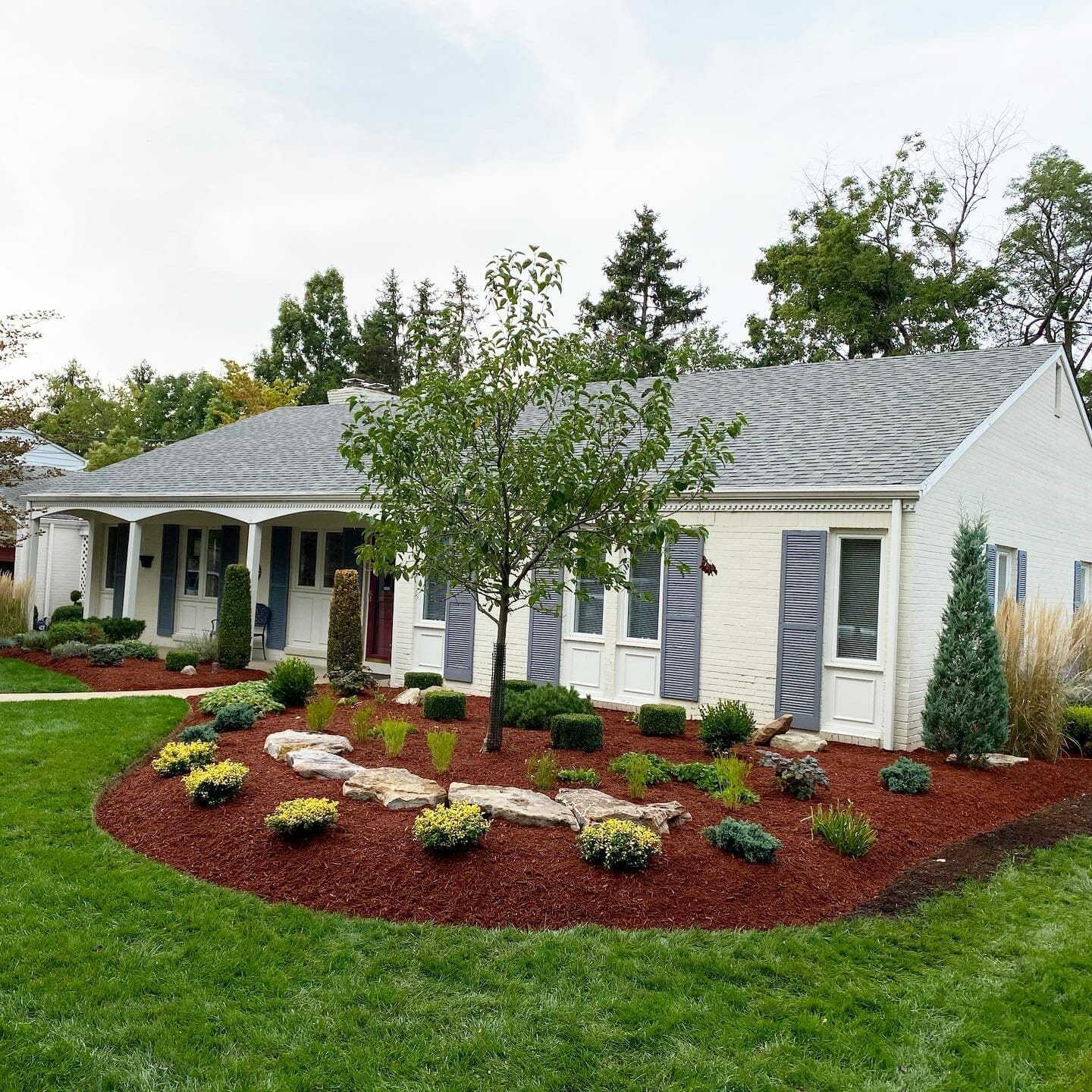 Dream Greener's landscape installation team works with South Hills homeowners to select and install plants that are genuinely suited to each property's specific soil, light, and drainage conditions. We don't simply install what happens to be available on a truck that week. With our own on-site nursery and material stock, we carry plant selections curated specifically for local performance, which means you're not gambling on whatever happened to arrive at a big-box store that morning.
There's also a warranty consideration that sets professional installation apart from DIY planting. For trees and shrubs we source, deliver, and install, Dream Greener offers a one-year warranty as standard coverage. Clients who enroll in our Full-Service Continuous Care Program, which includes our Plant Health Program, bed care services, annual trimming and pruning, and mulch or composting services, receive a Lifetime Warranty on those trees and shrubs. If a covered plant dies while you are enrolled in that program, we replace it with a plant of equal value and original installed size at no additional charge. That level of backing is only possible because we control the selection, sourcing, and installation from start to finish.
If you're ready to add trees, shrubs, or perennials to your Mt. Lebanon, Upper St. Clair, or Peters Township property this season, reach out to schedule a consultation. Our team will assess your site conditions, recommend species that will actually thrive, and handle installation properly from the start, so what you plant this June is still performing beautifully five years from now.
Frequently Asked Questions About Plant Installation in Pittsburgh
When is the best time to plant trees and shrubs in Pittsburgh?
Spring (mid-April through June) and fall (September through October) are the two ideal windows for planting in Pittsburgh's Zone 6b. Both seasons offer moderate temperatures and typically adequate rainfall to support root establishment. If planting in June, aim to finish by the last week of the month before sustained summer heat arrives. Fall planting can actually produce stronger root systems because soil stays warm even as air temperatures cool, but plant selection needs to account for winter hardiness.
Can I plant perennials in summer in Pittsburgh?
You can, though early summer is far better than mid or late summer. The key risk with summer planting is heat and drought stress during the establishment period. If you plant in June or early July, plan on watering new perennials frequently during dry stretches for the first six weeks, every two to three days at minimum and potentially every day depending on temperatures and conditions. By August, the risk of heat stress is high enough that we generally recommend waiting until September for any significant perennial installation.
What's wrong with my clay soil, and can I fix it?
Clay soil isn't inherently bad. It holds nutrients well and provides stable anchoring for plant roots. The problem is compaction and drainage. Compacted clay resists root penetration and holds water so effectively that root zones can become anaerobic (oxygen-deprived) during wet periods. The solution isn't to replace your soil, but to improve it: incorporating aged compost, aerating compacted areas, and most importantly, choosing plants that tolerate or prefer heavier soils. Trying to grow drought-tolerant, fast-draining plants in South Hills clay is a losing battle.
Why did my plants survive the first year and die in the second?
Second-year failure, sometimes called transplant death lag, is more common than most people realize. Plants often survive on their nursery root ball for the first season without ever establishing significant roots in the surrounding soil. Then, when that nursery root ball dries out or freezes in year two, the plant has no backup system. It typically points to inadequate planting hole preparation, incorrect depth, or failure to break up the surrounding clay enough to encourage outward root growth.
How much mulch should I apply around new plantings?
Two inches of mulch in a wide ring around new trees and shrubs helps moderate soil temperature, retain moisture, and suppress weeds during establishment. Keep mulch pulled back two to three inches from the trunk or stem. Mulch piled against bark, sometimes called a mulch volcano, traps moisture against the wood and creates conditions for rot and pest entry. The ring should extend at least 18–24 inches out from the base for shrubs and ideally to the drip line for trees.
Does Dream Greener carry plants for South Hills conditions specifically?
Yes. Dream Greener is one of the few landscape companies in the Pittsburgh area with its own on-site nursery and material stock. Our plant selections are sourced and curated with South Hills growing conditions in mind, which means species known to perform in Zone 6b clay soils, under mature tree canopy shade, and through Pittsburgh's freeze-thaw winter cycles. You can review options during a consultation rather than hoping the right plant is on the shelf at a garden center.