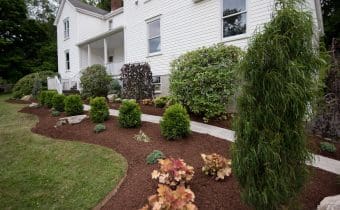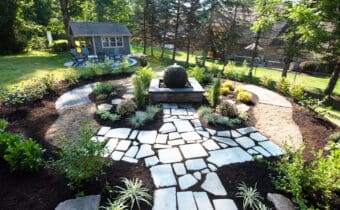
August in Pittsburgh is the month that reminds you why you invested in your outdoor space in the first place. Evenings are warm enough to sit outside comfortably long after dinner. The hardscape you built, the plantings you installed, the patio that finally came together the way you envisioned it, all of it is at its best right now.
And then the sun goes down and the whole thing disappears.
For South Hills homeowners who have put real thought and real money into their outdoor environments, losing the space at dusk is a genuine loss. Landscape lighting solves that problem directly. A properly designed system extends the usable hours of your outdoor space, highlights the features that make it worth looking at, and adds a layer of security and safety that carries value well beyond summer evenings. It also looks different from everything else on the block, because most residential outdoor lighting is either inadequate, poorly aimed, or both.
This post covers what separates a professionally designed landscape lighting system from a box of solar path lights, how low-voltage LED systems work, what fixtures do which jobs, and why August is actually the right time to start thinking about this for fall installation.
What Landscape Lighting Actually Does
The U.S. Department of Energy identifies three primary purposes for residential outdoor lighting: aesthetics, security, and safety. In a well-designed landscape lighting system, all three operate simultaneously, reinforcing each other rather than competing. A well-placed uplight on a specimen tree highlights the tree beautifully, casts ambient light across the surrounding area, and eliminates a dark corner that would otherwise be a security vulnerability. Pathway lights guide guests safely to the front door while defining the edges of the landscape and making the property look welcoming from the street.
That integration of purposes is what distinguishes a designed system from a collection of fixtures someone pointed at things they wanted to see. The latter, while common, tends to produce uneven coverage, harsh glare, dark gaps between lit areas, and a result that looks busy rather than intentional. Landscape lighting design is fundamentally about controlling where light goes, how bright it is in each zone, and what the eye sees first when it scans the property after dark.
Low-Voltage LED Systems: What They Are and Why They Matter
Most residential landscape lighting installed today runs on low-voltage systems: 12-volt circuits powered by a transformer that steps down standard household current. Low-voltage systems can be installed without an electrician for the fixture runs themselves, though the transformer requires a standard outdoor outlet. They are safe, flexible, and well-suited to the kind of zone-by-zone lighting design that makes a landscape look considered rather than improvised.
The shift to LED technology has transformed what low-voltage systems can do. Earlier generations of low-voltage landscape lighting relied on halogen bulbs that ran hot, burned out frequently, and consumed considerably more energy for the light output they produced. According to the U.S. Department of Energy, LED lighting uses at least 75 percent less energy than traditional incandescent and halogen sources while delivering comparable or superior light output. For a landscape system with 20 to 40 fixtures running on timers for several hours each evening, that efficiency difference translates to meaningful savings over the course of a season, and the fixtures themselves last dramatically longer before requiring replacement.
High-quality LED fixtures also offer better color rendering than older halogen alternatives, particularly important for landscape lighting where the goal is often to showcase the natural color of stone, foliage, bark, and flower. A warm white LED at 2700K to 3000K color temperature renders plant material and stone naturally and invitingly, without the yellow cast of older incandescent sources or the cold, clinical quality of high-color-temperature LEDs better suited to commercial applications.
Why DIY Solar Falls Short
Solar path lights and accent fixtures have improved considerably in the last several years, and for casual use in a sunny location they can be adequate. For South Hills properties, they consistently underperform for three reasons worth understanding before a homeowner invests in them and is disappointed.
- Not enough sun. Solar fixtures need consistent direct sun to charge. Pittsburgh averages roughly 59 sunny days per year, one of the lower figures among major U.S. cities, and the mature tree canopy across Mt. Lebanon, Peters Township, and Bethel Park means many fixtures never fully charge. Output goes dim and fades well before midnight.
- Consumer-grade build quality. Lenses yellow and crack after two to three seasons, and battery capacity degrades. Fixtures that look acceptable in the garden center display look cheap in a landscape that has real hardscape, real plantings, and real design behind it.
- No control and no zoning. Solar fixtures can’t be timed, dimmed, integrated with smart home systems, or zoned into the layered effects that make a landscape look designed. They run at whatever brightness the day’s charging allowed, until the battery gives out.
What Different Fixtures Accomplish
A designed system layers five fixture types, each doing a different job:
- Path and step lighting. Low-level illumination that defines edges and prevents trips rather than flooding the area. The goal is visibility and definition, not brightness. On South Hills grade changes, step lights set into risers or flanking walls make the steps from July’s post safe and navigable after dark.
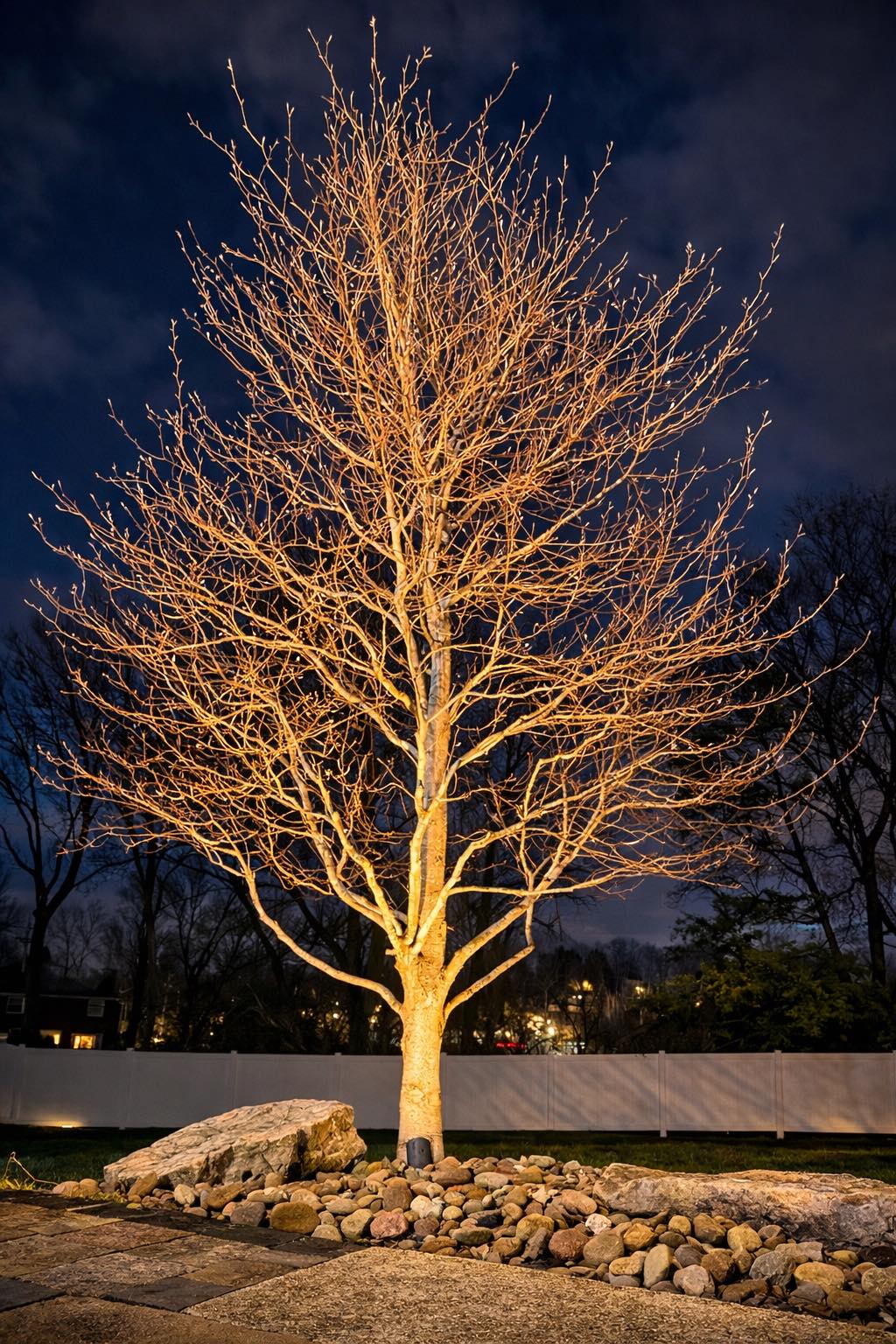
- Uplighting. Fixtures at the base of trees, specimen shrubs, or architectural features cast light upward for drama and visual height. A mature oak lit from below reads as a centerpiece at night in a way it simply doesn’t during the day. Works equally well on retaining walls, boulderscapes, and water features.
- Accent and spotlighting. Directional fixtures that pick out one feature: the face of a natural stone wall, the cascading edge of a water feature. Aim angle is everything. Light grazing a textured surface from a low angle throws shadows that emphasize dimension; the same fixture aimed straight on flattens it.
- Patio and deck lighting. Ambient light for the space where people actually sit and eat, from lights recessed into posts and railings to downlights in overhead structures. Enough to see clearly, without feeling like you’re sitting under stadium lights. If you built a patio or outdoor living space this season, this is what determines whether you actually use it after eight o’clock.
- Architectural and wall lighting. Grazing light across the facade brings out materials that are invisible after dark. On the brick colonials and craftsman homes common in Mt. Lebanon and Bethel Park, it creates texture and warmth that makes the house look cared-for from the street.
From Summer Evenings to Year-Round Value
Landscape lighting is one of the few outdoor investments that delivers value across all four Pittsburgh seasons. Summer evenings are the most obvious use case. But fall is when landscape lighting arguably looks its best: the contrast between warm fixture light and darkening foliage creates the kind of atmosphere that photographs well and makes the property feel warm and inhabited during Pittsburgh’s increasingly early sunsets.
Winter is where lighting becomes functional in a different way entirely. Snow-covered landscapes lit from below are genuinely beautiful, and pathway and step lighting that was a comfort in summer becomes a safety necessity when ice is involved. Holiday lighting adds another dimension for homeowners who choose to extend their system seasonally, with many of the same fixtures and infrastructure supporting decorative lighting that would otherwise require separate installation.
Spring closes the loop: as new growth emerges on the plantings that were installed in June, lighting reveals the seasonal change in a way that no daytime photo fully captures.
How Dream Greener Designs and Installs Landscape Lighting
 Dream Greener is a Gold Level Partner with Kichler Lighting, one of the professional landscape lighting industry’s most respected manufacturers. Kichler’s professional-grade outdoor fixture line is engineered for durability, precision optics, and long-term LED performance in demanding outdoor environments, including Pittsburgh’s freeze-thaw winters. Every fixture Dream Greener installs is selected from that professional-grade catalog rather than the consumer-grade products available at home improvement stores, and the difference in build quality, light quality, and longevity is significant.
The National Association of Landscape Professionals, of which Dream Greener is a member, sets standards for lighting design, installation, and electrical safety that guide how we approach every project. Our team evaluates each property’s architecture, existing hardscape, plantings, and nighttime lifestyle before recommending a lighting plan. Dream Greener’s plant health care specialists also weigh in on fixture placement to ensure that light and heat from fixtures don’t negatively affect the plantings they’re illuminating, a detail that a lighting-only contractor may not consider.
System design begins with a Dream Meeting where we walk your property after dark, assess what’s worth highlighting and what problem areas need addressing, and develop a layered plan that covers the full range of fixture types your space requires. We handle wiring, transformer sizing, smart integration setup, and final adjustments after dark to confirm the system performs exactly as designed.
Frequently Asked Questions About Landscape Lighting in Pittsburgh
How much does landscape lighting installation cost in the South Hills?
Landscape lighting cost varies based on the number of fixtures, fixture quality, the complexity of wiring runs, transformer requirements, and whether smart integration is included. A modest system of 10 to 15 path and accent fixtures on a standard South Hills residential property might start around $2,500 to $4,000 installed. A more comprehensive system covering pathways, patio, trees, architectural features, and water features on a larger property runs considerably more. An accurate estimate requires a site visit and lighting design conversation.
What is the difference between low-voltage landscape lighting and hardwired outdoor lighting?
Low-voltage landscape lighting runs on 12-volt circuits powered by a transformer that plugs into a standard outdoor outlet. It is safe to handle, flexible to install and reconfigure, and suitable for the vast majority of residential landscape lighting applications. Hardwired line-voltage outdoor lighting operates on standard 120-volt household current and requires permits and a licensed electrician for installation. Most residential landscape lighting, including path lights, uplights, accent lights, step lights, and patio fixtures, is low-voltage. Hardwired systems are typically used for very high-output security lighting or permanent structural applications.
Will landscape lighting work on a sloped South Hills property?
Yes. Sloped properties often benefit more from professional landscape lighting than flat ones, because grade changes create natural opportunities for dramatic uplighting, defined pathways, and illuminated steps that are both beautiful and genuinely functional. Dream Greener installs lighting systems on steep and uneven terrain throughout the South Hills, adjusting fixture angles, wiring placement, and base preparation to accommodate grades that would challenge a DIY installation.
How long do LED landscape lighting fixtures last?
Quality LED landscape lighting fixtures are rated for 25,000 to 50,000 hours of use, which translates to well over a decade of nightly use before bulb replacement is needed. The fixtures themselves, particularly professional-grade options from manufacturers like Kichler, are engineered to withstand outdoor conditions including Pittsburgh’s freeze-thaw cycles, UV exposure, and humidity. LED systems require significantly less ongoing maintenance than older halogen systems, though we recommend seasonal inspections to adjust fixture aim, clear debris from lenses, and verify transformer performance.
Can landscape lighting be added to an existing patio or hardscape?
Yes, and this is one of the most common requests we handle. Step lights can be retrofitted into existing risers or wall faces. Uplights can be positioned at the base of existing trees and shrubs. Accent fixtures can be wired to highlight retaining walls, boulderscapes, or water features that were installed without lighting originally. In most cases, adding lighting to an existing landscape is straightforward and transforms how the space reads after dark. The Dream Meeting is a good opportunity to walk the property and identify which existing features are worth highlighting.
Does Dream Greener provide ongoing landscape lighting maintenance?
Yes. Dream Greener provides ongoing maintenance and repairs for the lighting systems we install, including fixture cleaning and realignment, bulb replacement where needed, troubleshooting, and seasonal adjustments. We also offer maintenance on existing systems installed by others. LED systems require less routine attention than older halogen installations, but regular seasonal checks keep a system performing at its best and catch any issues before they affect the overall design.